TL;DR. Twenty years after the first trials, three results are reproduced across meta-analyses: a companion robot reduces agitation in residents with dementia, it reduces distress in children undergoing a needle procedure, and it brings a modest social gain to children with autism. That is a real foundation, built by a young field. It is also concentrated: a single robot, the PARO seal, carries more than half of the randomized literature. The most interesting question this corpus raises is that of the comparator. Most trials set the robot against usual care, which mainly measures the contribution of one-to-one attention. The few trials that built a genuine comparison, against an identical plush toy or against a tablet, tell a different story, and that is where the next advances will come from. This state of the art brings together what eighty studies establish, what is still being debated, and the seven questions that remain to be addressed.
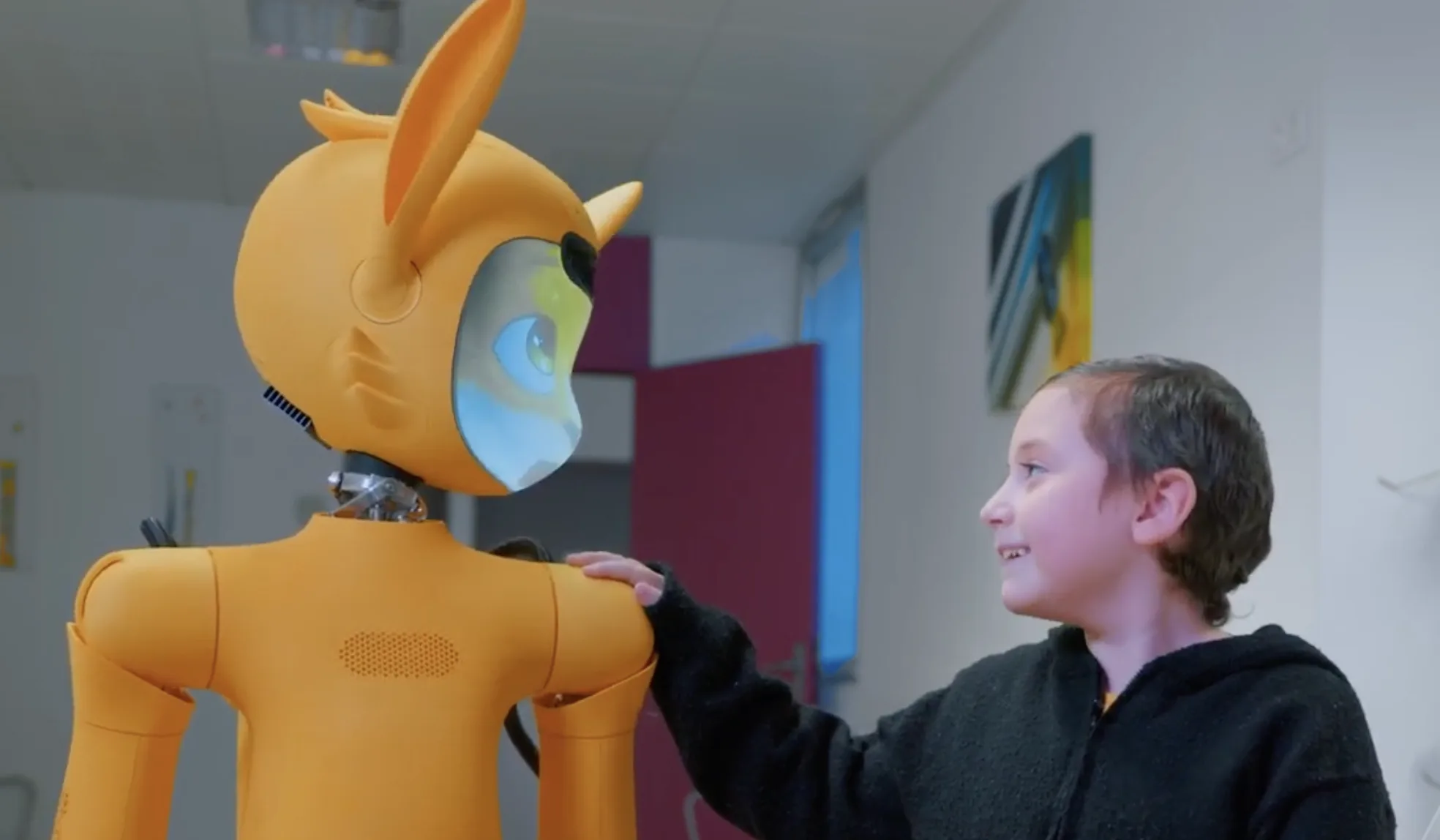
A seal robot that people stroke in a long-term care facility. A small humanoid that gets a child to breathe while an IV is being inserted. A machine that explains an examination before an MRI. These devices exist, they are being deployed, and entire departments are wondering whether to buy one.
The literature that answers this question is abundant, and it has a feature one notices when reading it in full: the great majority of trials compare the robot with usual care. That is the normal first step of a young field, and it has produced solid results. By construction, it also measures the contribution of one-to-one attention as much as that of the technology. The few studies that built a more demanding comparison, against a plush toy, against a tablet, against a professional, tell something finer, and that is the most interesting thread to follow.
This text brings together what clinical trials establish, population by population, each time with the sample sizes, the comparator and the level of evidence. It also says what is still being debated, and which questions remain open. It is written for a reader who has to decide.
I built a Claude skill that does the literature search. This article was written with it. Enjoy the read.
1. What we call a social robot in health care
A social robot is a machine designed to interact with people through social channels: speech, gaze, gesture, touch, simulated emotional expression. What separates it from other medical robots is not its form but its function. A surgical robot is an instrument that the surgeon holds at a distance. An exoskeleton exerts a force on the body. A social robot, for its part, does nothing to the patient: it speaks, it reacts, it lets itself be touched, and the expected effect passes entirely through the relationship it induces.
This definition has a direct consequence for how the literature is read. A substantial share of the publications that present themselves as belonging to robotics in health care in fact deal with physical assistance, and say nothing about the subject addressed here. In the subset devoted to rehabilitation, 16 works out of 60 fall under physical assistance or exoskeletons and must be set aside before any reading. A recent scoping review makes the same observation in broader terms: the existing reviews mix companionship, telepresence, monitoring, psychosocial support and rehabilitation, which makes the properly clinical evidence difficult to interpret [1].
Three roles can be distinguished in the published protocols, and they do not involve the same level of evidence.
The companion robot is an object of presence. It delivers no content, it is there, it reacts to touch, and the expected effect concerns mood, agitation or loneliness. This is the dominant paradigm in geriatrics.
The mediator robot carries a pre-existing protocol that it does not modify: a joint attention program, a patient education session, a breathing exercise. Here the robot is a vector, and the question becomes whether the vector adds anything to the content it carries.
The partner robot is a direct interlocutor, in an imitation game, a simulated interview or a conversation. This is the most demanding role technically, and the least evaluated clinically.
One technical detail weighs heavily on the interpretation of the whole. A substantial share of these interventions relies on so-called Wizard of Oz control, meaning that a human operator remotely produces part of the behaviors attributed to the robot. A 2026 systematic review on autism makes this a central point of its critique [2], and the procedure is found elsewhere: in a diabetes education study, it was experienced nurses who controlled the robot during the consultations [3]. The genuinely autonomous share of the robot’s behavior is almost never reported. Part of what the literature attributes to machines is therefore produced by humans.
2. The robots actually studied
Of the 106 clinical studies in the corpus that name their robot, three platforms account for 69 of them: PARO with 33 studies, NAO with 19, Pepper with 17. The 19 other named robots share the rest, almost all of them with one or two feasibility studies without a comparison group.
The concentration is even more marked for randomized trials. Of the 43 studies labeled randomized, PARO accounts for 23, Pepper 9, NAO 5, Kaspar 2, PIO 1 and Huggable 1. A single robot therefore accounts for more than half of the randomized literature in the field, and 16 of the 22 named robots have no randomized study at all.
The populations are just as narrow: 22 of these 43 trials concern dementia, 5 autism, 5 hospitalized or school-age children, 4 older adults without dementia, 4 mental health, 2 patients with somatic conditions.
PARO
PARO is a robot shaped like a baby seal, covered in white fur, designed to be held and stroked. It responds to touch, voice and light, emits sounds and moves its head and flippers. It is presented as a robotic pet intended for therapeutic use [4].
Its standing in the literature rests on one trial. An Australian cluster randomized trial allocated 415 residents with dementia from 28 long-term care facilities to three arms: PARO in individual sessions of 15 minutes three times a week for 10 weeks, a plush toy identical in appearance whose robotic functions were disabled, and usual care [5]. It is the only large trial in the field with an active comparator built to isolate the contribution of the technology, and its conclusion is explicit: PARO does better than usual care on mood and agitation, but it does better than the plush toy only on engagement.
A second result from this same trial deserves to be noted, because it bears on measurement itself. The effect on agitation appears in the video coding of observed behaviors, and disappears when agitation is measured with the validated reference instrument, the Cohen-Mansfield Agitation Inventory short form, in the same population and over the same period. Meta-analyses that pool agitation do not separate these two modes of measurement.
The other randomized trials with PARO are small and test against usual care: a decrease in observed pain and in as-needed analgesics in 43 residents [6], longer nighttime sleep in 41 residents [7], a decrease in loneliness in 40 residents [8], fewer psychotropic drugs and less delirium than human visits in 38 hospitalized patients [9]. Two are negative on their primary outcome, one in 85 residents [10], the other in 30 dyads at home [11].
A secondary analysis of the large Australian trial specifies whom the intervention is for: the participants who were most agitated at baseline respond poorly, and the authors recommend reserving PARO for mild to moderate agitation [12]. It is the only argued restriction of indication in the field.
Pepper
Pepper is a humanoid about 1.2 meters tall, mounted on a wheeled base, with articulated arms and most often fitted with a tablet attached to its chest that carries the content delivered. Its literature is more recent and more fragile than PARO’s, and its randomized trials diverge.
In 30 children with type 1 diabetes, patient education delivered by Pepper does better than a qualified nurse educator on knowledge and on mean weekly capillary blood glucose [13]. In 32 caregivers of patients with dementia randomized between a Pepper coach and a tablet alone, caregiver burden, the primary outcome, does not move, and two acceptability dimensions are better in the control group [14]. In 100 patients with mild cognitive impairment randomized between administration of the MMSE by Pepper and administration by a neuropsychologist, scores are equivalent and satisfaction is higher with the robot [15].
NAO
NAO is a small programmable humanoid, 58 centimeters tall, capable of fine gestures and manipulation, to the point of playing the xylophone in a music therapy protocol [16]. It is the most widely used robot in children and in neurodevelopmental disorders, but its randomized evidence base is thin.
In 40 children with a specific learning disorder, randomized between NAO assisted by a special education teacher and the teacher alone, the two groups improve comparably, the robot’s advantage being limited to certain phonological awareness exercises [17]. In 30 children with autism randomized 15 per arm against a waitlist, gesture training improves the production of intransitive gestures, including on new stories [18].
Other platforms
Kaspar is a humanoid with a deliberately simplified face, designed for autism. It accounts for 5 studies, 2 of them labeled randomized: a feasibility trial in the British public service, with 38 children randomized, 26 percent of study withdrawals and no published efficacy results [19], and a feasibility study protocol without results [20].
PIO, a Korean robot aimed at cognition, carries one of the few randomized trials with a clinical outcome outside PARO: in 66 older adults with mild to moderate dementia, cognitive function improves by 3.9 points versus 0.1 in the control group, and depression does not move [21].
Huggable, a robotic teddy bear, carries the only trial setting a physical robot, an on-screen avatar and an inert plush toy against one another in hospitalized children: the robot produces the most verbal exchanges and multi-party interactions, the avatar captures the child but draws the child away from the people present, and the plush toy is the least engaging while being the most touched [22]. It is the only direct argument in the corpus in favor of physical embodiment.
Hyodol, a Korean robotic doll, is the most widely deployed platform in the community, but without a control: 169 older adults living alone, with a depression score going from 6.28 to 3.40 [23]; elsewhere, of 35 older women given the device for four months, 24 kept the robot and 11 returned it [24].
The rest consists of single descriptive studies without a control, two of them negative: MARIO in long-term care, with no difference in quality of life, depression or perceived social support [25], and Telenoid, a telepresence device held in the arms, with no change in engagement [26].
3. What the literature establishes, population by population
3.1 Dementia and geriatrics
This is the population in which meta-analyses of randomized trials are the most numerous, which makes it possible to discuss effect sizes here and not only the direction of the results.
What converges. Three reviews agree on agitation. A review of 15 studies totaling 705 participants, 12 of them meta-analyzed, gives a standardized mean difference of -0.36 (95% CI -0.56 to -0.17) [27]. A second gives -0.26 (95% CI -0.49 to -0.03) [28]. A third, restricted to Australian trials with PARO, gives -0.44 (95% CI -0.70 to -0.18) [29]. A small to moderate effect, reproduced by three separate teams.
On cognition and on quality of life, the absence of effect is just as consistent.
What diverges. On anxiety, two meta-analyses find a reduction, one with a weighted mean difference of -1.93 scale points (95% CI -3.13 to -0.72), the other with a standardized mean difference of -0.59 (95% CI -0.91 to -0.27). The third finds nothing, with an interval that spans the entire scale (1.12, 95% CI -1.73 to 3.98). On depression, the configuration is reversed: a significant effect in one (-0.30, 95% CI -0.56 to -0.03), nothing in the other, and an internally inconsistent result in the third, which pairs an interval excluding zero with a p value of 0.09.
Three meta-analyses published in the same year, on largely overlapping sets of trials, thus reach opposite conclusions on anxiety and on depression. That is a useful signal: on these two outcomes, it is better to read all three than to rely on a single one.
In older adults without dementia, the outcomes change: loneliness, mood, preserved cognition. A meta-analysis devoted to loneliness, covering 19 studies and 1,083 participants, concludes that there is a significant reduction, more marked in long-term care than at home, with neither the type of robot, the duration, nor cognitive status modifying the effect [30]. In 68 people with a mean age of 82 years living alone at home, the BOCCO emo robot reduces loneliness (difference in differences -3.1, 95% CI -5.9 to -0.4) and improves psychological well-being [31]. The PICMOR program, in which the robot does no more than regulate turn-taking in a group conversation, improves verbal fluency compared with an unstructured conversation in 65 people [32].
The negative results are worth citing, because they are seldom taken up. In 30 cognitively intact older adults, interaction with PARO changes neither the attitudes nor the emotions measured before and after [33]. In long-term care, a hydration strategy relying on a robot does less well than systematic rounds, with 354 milliliters per day less [34]. In a singing group, therapeutic factors remain higher with an occupational therapist than with a robot [35]. And the longest trial, with the humanoid robot Kabochan in 103 residents in a 32-week ABAB design, shows an effect only on caregiver distress at week 16, with a worsening of neuropsychiatric symptoms when the robot is withdrawn [36].
This last point is the only element the field has on the question of withdrawal.
What is settled, what remains open. In institutionalized patients with dementia, a companion robot reduces agitation compared with usual care, with a small to moderate effect size consistent across three meta-analyses, and increases engagement and positive affect during sessions. It changes neither cognition nor quality of life. It cannot be asserted that it does better than a plush toy of identical appearance on mood or on agitation, nor that it reduces psychotropic drug use, nor that it works in the most agitated patients, nor that the effect persists after it is stopped.
3.2 Autism and neurodevelopmental disorders
This is the second population in the corpus, and the one in which the question of mechanism is posed most directly.
What the robot does. It occupies the three roles described above. It mediates a triadic interaction between the child, itself, and the therapist. It delivers a pre-existing protocol that it does not modify: Picture Exchange Communication System, Pivotal Response Treatment, cognitive behavioral therapy, social stories. It serves as a direct training partner in imitation games or simulated job interviews. The outcomes are dominated by joint attention, both responding and initiating, then by imitation, recognition of basic emotions, and social reciprocity.
The decisive question. Does the benefit come from the robot, or from the structured protocol it carries? The literature is divided, and the division is clear-cut.
Several randomized trials compare the robot with a human provider delivering the same content and conclude that the two are equivalent. The most explicit has 14 intransitive gestures taught according to an identical standardized protocol, either by a robot or by an experimenter, to 23 children aged 6 to 12 with autism and intellectual disability: its conclusion is that the nature of the teaching agent ceases to matter when the lesson is highly structured [37]. The largest randomized trial in this section, 82 children aged 4 to 9 trained in empathy through short scenes performed either by humans or by robots, finds comparable efficacy in the two arms [38].
The most informative trial is a dismantling study. Pivotal Response Treatment was delivered with and without robotic assistance, against usual care, in 73 children aged 3 to 8. No difference between groups on parent- and teacher-rated social communication skills, or on blinded ratings of global functioning at the end of treatment [39].
Other work, by contrast, supports an effect specific to the robot. A randomized crossover trial in 32 children with the iCub robot includes an active human control arm and reports an improvement in social cognition in the robot arm only [40]. A three-arm trial in 60 children finds significant differences in communication and reciprocal social interaction between the robot arm and both the control arm and the human-led arm [41].
The dividing line follows the type of outcome, and this is the most useful observation in this section. Proximal measures, taken within the training context and by direct observation, favor the robot. Standardized, generalized, or parent- and teacher-rated measures do not separate the arms.
The quantitative syntheses. The magnitudes increase as the inclusion criteria broaden. The most restrictive one, limited to randomized trials, finds an effect on social functioning of g = 0.35 (95% CI 0.09 to 0.61) across 7 trials, no significant effect on emotional or motor outcomes, and age explaining nearly a third of the variance, to the benefit of younger children [42]. A three-level meta-analysis of 20 trials and 532 children yields g = 0.51 [43].
The systematic review that retains only randomized trials is the most cautious: of 19 trials, 11 give a positive result on the primary outcome, 5 on the secondary outcomes, and 3 report that the robot groups did no better than the others. Its authors conclude that the robot is mostly added there as an entertainment agent intended to elicit engagement, and that it is not in a position to deliver high-level care [44].
The negative signals. A three-arm randomized trial in 65 children with autism or Down syndrome uses the robotic dog as an active control for therapy assisted by a live dog: the live dog arm improves more on emotional attunement and regulation, and the lowest reliable change indices are found in the robot arm [45]. In a series comparing rhythm, robotics, and usual care in 36 children, the robot group shows a reduction in positive affect over the course of training [46] and does not improve the standardized communication test that the rhythm and comparison groups do improve [47]. A scoping review of repetitive behaviors reports, across 10 studies, a reduction in most of them, an increase in stereotypies in one, and no change in another [48].
What is settled, what remains open. A structured, repetitive program delivered by a social robot modestly improves social and emotional skills in children with autism, with an effect size around 0.35 on social functioning when the analysis is restricted to randomized trials. The claim that the robot is the active ingredient is not established: the trials comparing it with a human delivering the same content contradict one another, and the cleanest dismantling trial finds no difference at the end of treatment. What the literature demonstrates most solidly is the effectiveness of structure, predictability, and repetition. The robot is a convenient vehicle for these, not a characterized treatment.
3.3 Hospital pediatrics
Almost all the trials address a short, dreaded procedure rather than the hospital stay. The randomized data concentrate on venipuncture and influenza vaccination.
The three trials that carry the section. The founding trial randomized 57 children with a mean age of 6.87 years between standard influenza vaccination and vaccination during which a humanoid robot applied cognitive behavioral strategies. Pain and distress decreased significantly according to all four assessment sources, parents, children, nurses, and researchers, with effect sizes from 0.49 to 0.90 [49]. It is the only randomized trial in which both dimensions decrease together.
The pediatric emergency department trial at the Stollery Children’s Hospital randomized 86 children aged 6 to 11 scheduled to receive IV insertion. Distress measured with the OSBD-R was 1.49 under usual care versus 0.78 with the robot (p < 0.05), and pain measured with the FPS-R was 4 versus 2, without reaching the significance threshold (p = 0.13) [50]. Ninety-six percent of the children had received a topical anesthetic, which lowered baseline pain.
The largest trial is also the most negative. 137 children aged 4 to 12 in short-stay surgery, 119 of whom were analyzed, randomized between standard care and standard care plus a robot programmed to teach deep breathing: no difference in pain or in fear, and no change over time [51]. One exploratory result nonetheless deserves attention: the children in the robot group were five times more likely to complete the IV insertion (odds ratio 5.04; 95% CI 1.06 to 24.00; p = 0.04). The interval is wide, but the outcome is the one that matters at the bedside.
The dissociation between distress and pain is the most reproduced result in the section. A 2024 meta-analysis, based on 10 randomized trials and 815 children undergoing needle procedures, finds a reduction in anxiety (SMD -0.36; 95% CI -0.64 to -0.09) and in distress-related avoidance behaviors (SMD -0.67; 95% CI -1.04 to -0.30), but no effect on pain (SMD -0.02; 95% CI -0.81 to 0.78) or on fear [52]. A 2025 meta-analysis goes in the same direction: pain, SMD -0.10 (p = 0.54); stress and distress, SMD -0.33 (p = 0.003) [53]. A 2026 perioperative meta-analysis finds a reduction in postoperative anxiety, based on the pooling of two studies and 302 participants, and concludes that the effect on pain, fear, and stress is null or minimal [54].
What the robot reproducibly shifts is therefore the emotional and behavioral experience of the procedure, not nociception. This reading makes the observed gain in completion of the procedure coherent.
Where the studies contradict each other. A recent review reverses this reading. Restricted to hospital randomized trials in those under nineteen years of age, it retains 13 trials, 7 of which enter the calculation, and finds a significant effect on pain based on 5 trials (mean difference -0.89; 95% CI -1.32 to -0.47), with non-significant effects on anxiety, fear, and distress. Certainty is judged moderate in the GRADE sense, limited by the absence of blinding and by the small number of studies [55]. The scopes and the search cutoff dates differ from one review to another. It cannot be asserted today either that the robot reduces pain or that it does not reduce it.
A second divergence concerns the mechanism, and it targets the dominant paradigm. Current practice programs the robot as a distractor. Yet a study that allocated 31 children with a mean age of 9.6 years between no robot, an empathic robot, and a distracting robot during IV insertion reports the lowest pain and fear scores in the empathy group and the highest in the distraction condition [56]. The result is isolated and the sample size small, but it bears on the hypothesis that underpins the majority of trials.
Pediatric oncology and long hospitalization. The level of evidence there is markedly weaker and rests on designs without a comparator. A pre-post study of a robotics workshop in 13 children and adolescents hospitalized for cancer reports an improvement in language on two dimensions, with no adverse event [57]. A counterbalanced protocol in 25 children aged 4 to 9 years treated for cancer reports a reduction in perceived pain [58]. A follow-up of 29 children out of school equipped for six months with a telepresence robot reports stability of quality of life and of the sense of belonging [59]. These designs do not separate the effect of the robot from the natural decline of pain and from the attention received.
What is settled, what remains open. In children aged 4 to 12 undergoing a needle procedure, adding a social robot to usual care reproducibly reduces behavioral distress and anxiety, with small to moderate effect sizes, without a demonstrated effect on fear, and with an effect on pain that remains debated between meta-analyses. Tolerability is good and no signal of harm is reported. It cannot be asserted that the robot does better than another well-conducted distraction, nor that it changes the experience of a long hospitalization, nor that it has been evaluated in radiation therapy or in preparation for imaging.
3.4 Rehabilitation
Once work on physical assistance and exoskeletons is set aside, the available comparative evidence amounts to three randomized trials, for a total of 71 participants analyzed.
The first is a three-arm pilot trial after stroke: the same upper-limb training delivered by a socially assistive robot or on a computer, each in addition to usual care, versus usual care alone. 33 patients randomized, 26 of whom completed the 15 sessions. The robot group improves significantly on movement smoothness, the Action Research Arm Test, and the Fugl-Meyer, with no significant improvement in the two other groups [60]. Two reservations are called for: the abstract reports only pre-post comparisons within each arm, with no direct between-group comparison, and the companion publication from the same trial finds only a non-significant trend toward better acceptance of the robot [61]. The motivational mechanism supposed to explain the clinical gain is therefore not established by the trial that carries it.
The second sets a humanoid robot against a physical therapist for supervising stretching exercises in chronic low back pain: randomized, single-blind, two centers, 27 participants analyzed [62]. Daily physical activity time, the primary outcome, does not differ between the groups, nor does any clinical outcome. Movements performed with the robot fall from 82% in the first week to 72% in the second and 47% in the third. The median usability score is 58 with the robot versus 87 in the control (p < 0.001), and the physical therapists’ median rating remains below 3 points on the technology acceptance model.
The third is a stepped-wedge trial in 18 children with autism and an IQ below 70: responses to joint attention improve in all three strata and are maintained [63].
What the reviews say. On cerebral palsy in children, a review of 20 studies concludes that there is an improvement in motivation, communication attempts, and engagement duration, with almost no long-term assessment [64]. An umbrella review on neurocognitive disorders separates two families of results: the most consistent benefit on emotional response and social interaction, mixed or non-significant effects on cognition, anxiety, agitation, depression, and quality of life [65]. A network meta-analysis of 20 randomized trials and 1,073 older participants finally gives therapy with a live animal an SMD of -2.04 (95% CI -3.03 to -1.04) on depression, versus a non-significant effect for robotic animals (SMD -1.21; 95% CI -2.79 to 0.38) [66].
What is settled, what remains open. A social robot can be deployed in rehabilitation with good patient acceptance, and in children it increases motivation and engagement duration. It does not allow one to assert that it improves motor recovery, pain, or disability beyond the same content delivered otherwise, for lack of between-group comparison on a primary outcome, nor that it replaces a professional, the two direct comparisons going in the opposite direction, nor that it sustains motivation over time, the only trial that measured it showing the opposite.
3.5 Mental health
This is the most recent field, and its interventional literature is still being built. There is not yet an efficacy meta-analysis in psychiatry.
Only one randomized trial has a sample size and an outcome that allow a clinical conclusion. It randomized 153 LGBTQ+ young people with self-harm ideation between a socially assistive tactile device combined with a safety plan and the safety plan alone, over thirteen weeks [67]. The primary outcome, perceived difficulty in emotion regulation, is positive: adjusted mean difference of -3.04 (95% CI -4.92 to -1.16; p = 0.002). On secondary outcomes, anxiety and depression are significantly lower, but no effect is found on self-harm itself. Two reservations: the comparator is the safety plan alone, with no comparison object described, and the primary outcome is a self-reported skill, not the at-risk behavior, which is precisely what does not change.
The second randomized trial of the same device does not find this effect. 39 adults awaiting outpatient care for an eating disorder were randomized between four weeks of the device and usual waiting: the primary outcome, emotion regulation, is negative, and it is depression, a secondary outcome, that shows a significant interaction [68].
Two trials of the same device, in two populations, thus give two different answers on the same primary outcome.
The only randomized trial addressing an acute stress response is negative: about twenty patients with psoriasis were subjected to a stress task then randomized between thirty minutes of interaction with PARO and thirty minutes sitting in silence, with no statistically significant difference on any outcome, psychological or cutaneous [69].
The rest falls under feasibility and acceptability. One trial randomized 32 patients hospitalized for depression between tablet-based cognitive training accompanied by a robot and the same training on the tablet alone: the comparator correctly isolates the robot’s own contribution, but the outcomes are usability and acceptance, not symptoms [70]. The largest randomized trial in this section, 230 participants, compares a brief mindful breathing session delivered by a robot with a simple rapport-building interaction, and reports no symptom outcome [71].
What is settled, what remains open. Only one result is established by a randomized trial with a comparator, and it concerns a self-reported skill with no effect on the at-risk behavior. To this is added a negative result on acute stress. This literature does not allow social robots to be presented as a treatment for depression or anxiety disorders.
3.6 Adult patients in general care
In general care, conversational robots for information and education perform no technical procedure: they speak, from a script, with predefined dialogue flows [72]. Providing information before an examination, running a patient education session, collecting what the patient says about their treatment: these three functions recur everywhere.
The decisive comparison. Only one randomized trial properly pits the robot against the medium it claims to replace. At Halle University Hospital, 117 patients due to undergo an MRI were randomized between information delivered by a humanoid robot and the same information on a tablet [73]. There was no statistically significant difference in knowledge transfer, and the usability score significantly favored the tablet. The authors conclude that robots can today convey information only as well as a low-cost tablet. No trial compares the robot with a written document.
Adherence and engagement. The most robust trial on adherence randomized 60 patients discharged from hospital for chronic obstructive pulmonary disease between a home robot for four months and usual care [74]. On the primary outcome, the number of respiratory hospitalizations, no difference. The secondary outcomes are favorable: electronically measured inhaler adherence at 48.5% of prescribed puffs versus 29.5% (p = 0.03), and a higher exercise frequency.
The largest trial in this section involved 229 thoracic and visceral surgery patients, allocated between usual care plus robot and usual care alone, with engagement and perceived quality of care as primary outcomes [72]. The overall effects on these two outcomes are limited, with a positive effect reported on pain management. The preprint specifies that retention was 90.1% in the control group versus 66.9% in the robot group [75]. Differential loss of this magnitude in the intervention arm invites reading the positive result as a lead, not as an established finding.
What the reviews claim, and on what basis. Two reviews put forward conclusions of a quite different nature from the trials. The review on advanced dementia care judges, on the basis of 23 articles, that autonomous robotic applications represent an excellent benefit for patients and the healthcare system [76], and the one on critical care attributes to telepresence a reduced response time, earlier intervention, and lower mortality [77]. No randomized trial in this section supports such claims. A third review in fact states the problem itself: studies place the emphasis mainly on the acceptability of the robot rather than on the outcomes of the intervention, and the absence of control groups limits generalization [78].
4. The three controversies
4.1 The comparator
This is the question that determines the scope of everything above, and the literature rarely addresses it head-on.
Three comparators coexist, and they do not measure the same thing. Comparing a robot to usual care measures the contribution of an individual attention-based activity, for which the robot is only the pretext. Comparing a robot to an inert object of identical appearance measures the contribution of the technology. Comparing a robot to a human professional measures an opportunity cost. The great majority of trials choose the first.
The most important result in the field is the one that builds the three comparisons within a single trial. In 415 residents with dementia, PARO does better than usual care on mood and agitation, and it does better than the plush toy only on engagement [5]. The same shift is found elsewhere: against a tablet, the robot does no better on knowledge transfer and does worse on usability [73]; against a physical therapist, it does not improve the primary outcome in low back pain [62]; against an occupational therapist, it lags behind on therapeutic factors in a singing group [35]; against a live dog, it obtains the lowest change indices [45]; and a network meta-analysis gives the live animal a significant effect on depression where the robotic animal has none [66].
The meaning of this work is not that social robots are ineffective. It is that the question asked determines the answer obtained, and that the question most often asked is the least demanding.
Two notable exceptions point the other way. The Huggable trial, which sets a physical robot, an on-screen avatar, and an inert plush toy against one another, concludes in favor of physical embodiment [22]. And diabetes education delivered by Pepper does better than a qualified nurse educator [13]. Each of these two results rests on a single, small, unreplicated trial.
4.2 The measured effect and the perceived effect
A second gap runs through the field, and it is structurally important for anyone considering a deployment.
In the Australian trial with 415 participants, families and care workers clearly prefer PARO to the plush toy and judge the latter to be of no interest [4], [79], whereas measurement separates the two objects only on engagement. The enthusiasm of teams and relatives is therefore, in the only trial that allows this to be checked, unrelated to the measured difference.
This gap has a direct methodological consequence. A large part of the literature rests on acceptability, satisfaction, and usability outcomes, that is, precisely on the dimensions where the perceived effect dominates. One review states it plainly: studies place the emphasis mainly on the acceptability of the robot rather than on the outcomes of the intervention [78].
Durability raises the same question from another angle. The only trial that includes a withdrawal of the device shows a worsening of neuropsychiatric symptoms once it is stopped [36]. The only trial that measured adherence week by week sees it fall from 82% to 47% in three weeks [62]. And the only work that looked for a delayed effect, on apathy after eight weeks of NAO-mediated workshops, does not find it again at twelve weeks [80].
4.3 Care workers
Care workers appear in this literature first as evaluators asked for their opinion, often before any use, then as users to be trained, and more rarely as subjects in whom an outcome of their own is measured.
There is no randomized trial allocating care workers between a group working with a social robot and a group working without one, with a workload or burnout outcome defined a priori. This is the most promising project in the corpus, because it concerns the population on which any real deployment depends.
The available comparisons are of another kind. The only random allocation concerns funding and not a robot: a Japanese study exploits a lottery for the award of subsidies, with 200 facilities of which 72 were drawn by lot, and finds a reduction in the number of care workers in the selected facilities in 2021 (difference in change -1.11; 95% CI -2.20 to -0.01), which attenuates in the following years. The exposure is eligibility for the subsidy, not the actual use of a given robot.
The most direct comparison on physical load is within-subject and covers 10 care workers: the robot shifts the load more than it removes it, with lumbar and upper-limb loads approximately 40% higher during the preparation phases and approximately 25 to 35% lower during the care phases themselves.
Acceptance is selective and depends on the task. In France, among 148 professionals, perceived usefulness is high for physical tasks and activity facilitation, lower for therapeutic mediation and feeding, and acceptability is higher for general use than for one’s own clinical practice. In Finland, healthcare professionals have less experience with robots and more negative attitudes than the general population, robotic assistance nonetheless being well received for load carrying and logistics.
On workload, the studies contradict one another. A robot-assisted cognitive stimulation intervention reports a significant reduction in caregiver burden, together with a caveat about the training required. A three-month study with a Pepper robot in a nursing home, where the robot was used on average one hour and seven minutes per day, concludes that the effect on workload is limited. And a Japanese ethnography describes devices that increase the workload of teams, because the robots too need to be looked after, and that ended up being returned.
Three requirements emerge for deployment, all of a qualitative or observational level. The effect takes months to appear, and it becomes recognizable only after continuous use. The possibility of configuring the device oneself without programming improves perceived usefulness and actual use. And maintenance weighs in the opposite direction from the benefits: in 331 operating room nurses followed over two waves, the benefits of the robot are positively associated with engagement (β = 0.13; p < 0.05) whereas its maintenance demands are negatively associated with it (β = -0.15; p < 0.05).
5. The seven questions still open
A twenty-year-old field that has produced three results reproduced across meta-analyses has done good work. The seven questions that follow are the ones it has not yet addressed, and the good news is that none of them requires a new technology: all are within reach of existing protocols.
Medication sparing awaits its dedicated trial. Psychotropic drug use is the clinical argument most often advanced for these devices, and it is not yet the primary outcome of any trial in patients with dementia. It appears as a secondary outcome in a pilot trial of 38 hospitalized patients [9], in a trial on pain where only as-needed treatments decrease [6], and in a quasi-experimental study where it remains unchanged [80].
Cost remains to be quantified. The corpus does not yet contain a completed health-economic evaluation, even though cost is named as a major limitation by families [4] and as a concern by care workers [79], in two qualitative studies nested within the largest trial in the field. The only figures available contrast 300 to 400 euros for a programmable robot with more than 10,000 euros for a specialized social robot, without any analysis.
The comparison between robots remains to be made. No study has yet set two social robots against each other in the same population. Yet this is the question raised by every department considering a purchase, which one for which symptom, and a two-arm trial would answer it.
Safety would gain from being documented systematically. The randomized trials in the corpus do not yet report adverse events or a safety outcome defined a priori, and only one explicitly states the absence of a serious adverse event related to the device [67]. The risk of emotional dependence on the object remains to be followed, all the more so since the only design that includes a withdrawal shows a worsening once it is stopped.
The long-term effect remains to be measured. Interventions typically last from three to twelve weeks, and no randomized trial with published results yet follows participants beyond three months after the intervention. This is an inexpensive extension of protocols that already exist.
Whole settings remain to be explored. Adult oncology, palliative care, and internal medicine have not yet been addressed, and the only foray into cancer care involves children, in designs without a comparator. Preparation for MRI and pediatric radiation therapy are particularly favorable settings, since prolonged immobility and the daily repetition of sessions are the central problem there. The autistic adult is another open setting. And on the professional side, the studies cover nurses, nursing assistants, care aides, and family caregivers, with physicians still to be included.
Field outcomes remain to be instrumented. In pediatrics, the duration of the procedure, the number of attempts, the use of restraint, and analgesic consumption are rarely reported, even though they are easy to collect. In general care, length of stay, readmission, and postoperative complications still await a positive trial, the only one whose primary outcome was a hospitalization being negative [74].
6. Four projects within reach
Four directions follow from the above, and all can be carried out with the robots and protocols that exist today.
Ask the comparator question before the robot question. This is the field’s highest-return lever, because it costs only one trial arm. The comparators that advance knowledge are the inert object of identical appearance, the equivalent digital medium, and the human professional delivering the same content. The first trial to have built all three into a single protocol remains, ten years later, the most informative in the field.
Choose outcomes that count at the patient’s bedside. Completion of the procedure, the number of attempts, the use of sedation, psychotropic drug use, length of stay. These outcomes exist, they are measurable, and their absence explains part of the gap between the enthusiasm of teams and what the literature demonstrates.
Measure what happens afterwards. The only trial that includes a withdrawal shows a worsening once it is stopped, and the only one that measures adherence week by week sees it collapse. A device whose effect disappears when it is stopped and whose use declines within three weeks raises a question of design, not only one of evaluation.
Study care workers as subjects. The absence of a randomized trial on workload, burnout, or absenteeism is the project that would pay off most, because it is the one that determines whether a device holds up in a department beyond the evaluation period. The time spent charging, cleaning, reconfiguring, and troubleshooting the robot is never quantified, even though it is described qualitatively as a real cost.
References
1. Xu W, Zhou X, Zeng Y, Han S, Hong Y. Embodied robots in rehabilitation-oriented interventions for older adults with disability or cognitive impairment: a scoping review. Frontiers in Rehabilitation Sciences. 2026;7. doi:10.3389/fresc.2026.1883386
2. Najm HT, Sabah Al-Araji A, Ahmad NS. Mobile and Humanoid Robots in Healthcare: A Systematic Review of Real-World Applications and Deployment Challenges. IEEE Access. 2026;14:77677-77700. doi:10.1109/ACCESS.2026.3693891
3. Asada Y, Horiguchi T, Yagi K, Komatsu M, Yamashita A, Ueta R, et al.. Robot-Assisted Approach to Diabetes Care Consultations: Enhancing Patient Engagement and Identifying Therapeutic Issues. Medicina. 2025;61(2):352. doi:10.3390/medicina61020352
4. Moyle W, Bramble M, Jones CJ, Murfield JE. “She Had a Smile on Her Face as Wide as the Great Australian Bite”: A Qualitative Examination of Family Perceptions of a Therapeutic Robot and a Plush Toy. The Gerontologist. 2017;59(1):177-185. doi:10.1093/geront/gnx180
5. Moyle W, Jones CJ, Murfield JE, Thalib L, Beattie ER, Shum DK, et al.. Use of a Robotic Seal as a Therapeutic Tool to Improve Dementia Symptoms: A Cluster-Randomized Controlled Trial. Journal of the American Medical Directors Association. 2017;18(9):766-773. doi:10.1016/j.jamda.2017.03.018
6. Pu L, Moyle W, Jones C, Todorovic M. 468 - Can a Robotic Seal Called PARO Manage Chronic Pain in People with Dementia Living in Nursing Homes?. International Psychogeriatrics. 2020;32:190. doi:10.1017/S1041610220003208
7. Pu L, Moyle W, Jones C, Todorovic M. The effect of a social robot intervention on sleep and motor activity of people living with dementia and chronic pain: A pilot randomized controlled trial. Maturitas. 2021;144:16-22. doi:10.1016/j.maturitas.2020.09.003
8. Robinson H, MacDonald B, Kerse N, Broadbent E. The Psychosocial Effects of a Companion Robot: A Randomized Controlled Trial. Journal of the American Medical Directors Association. 2013;14(9):661-667. doi:10.1016/j.jamda.2013.02.007
9. Munsterman E, Petersen S, Newcomb P. Use of Socially Assistive Robots to Improve Outcomes Among Hospitalized Older Adults With Dementia: A Pilot Randomized Trial. Journal of Gerontological Nursing. 2024;50(10):11-16. doi:10.3928/00989134-20240912-04
10. Inoue K, Kono M, Kobayashi R, Yatsu C, Yao DPG, Shibata T, et al.. A Randomized Trial Using PARO with Minimal Caregiver Involvement on Older Adults with Dementia in Group Homes. Alzheimer’s & Dementia. 2026;22(2). doi:10.1002/alz.71163
11. Liang A, Piroth I, Robinson H, MacDonald B, Fisher M, Nater UM, et al.. A Pilot Randomized Trial of a Companion Robot for People With Dementia Living in the Community. Journal of the American Medical Directors Association. 2017;18(10):871-878. doi:10.1016/j.jamda.2017.05.019
12. Jones C, Moyle W, Murfield J, Draper B, Shum D, Beattie E, et al.. Does Cognitive Impairment and Agitation in Dementia Influence Intervention Effectiveness? Findings From a Cluster-Randomized-Controlled Trial With the Therapeutic Robot, PARO. Journal of the American Medical Directors Association. 2018;19(7):623-626. doi:10.1016/j.jamda.2018.02.014
13. Alhmiedat T, AlBishi LA, Alnajjar F, Alotaibi M, Marei AM, Shalayl R. Improving Diabetes Education and Metabolic Control in Children Using Social Robots: A Randomized Trial. Technologies. 2024;12(11):209. doi:10.3390/technologies12110209
14. Zuschnegg J, Häussl A, Lodron G, Orgel T, Russegger S, Schneeberger M, et al.. Psychosocial effects of a humanoid robot on informal caregivers of people with dementia: A randomised controlled trial with nested interviews. International Journal of Nursing Studies. 2025;162:104967. doi:10.1016/j.ijnurstu.2024.104967
15. Formica C, Giambò FM, Latella D, Bonanno L, Lombardo M, Tomarchio O, et al.. Humanoid robots for psychological assessment in mild cognitive impairment: from evaluation to the future of AI-driven data prediction systems. Frontiers in Psychology. 2025;16. doi:10.3389/fpsyg.2025.1579626
16. Feng H, Mahoor MH, Dino F. A Music-Therapy Robotic Platform for Children With Autism: A Pilot Study. Frontiers in Robotics and AI. 2022;9. doi:10.3389/frobt.2022.855819
17. Papadopoulou MT, Karageorgiou E, Kechayas P, Geronikola N, Lytridis C, Bazinas C, et al.. Efficacy of a Robot-Assisted Intervention in Improving Learning Performance of Elementary School Children with Specific Learning Disorders. Children. 2022;9(8):1155. doi:10.3390/children9081155
18. So WC, Wong MKY, Lam WY, Cheng CH, Yang JH, Huang Y, et al.. Robot-based intervention may reduce delay in the production of intransitive gestures in Chinese-speaking preschoolers with autism spectrum disorder. Molecular Autism. 2018;9(1). doi:10.1186/s13229-018-0217-5
19. Irvine K, Mengoni S, Thakur D, Sharma S. G627 Study to investigate the effectiveness of using a humanoid robot (kaspar) to improve the social skills of children with an autism spectrum disorder (ASD): a randomised controlled feasibility trial. ADHD and related neurodevelopmental disorders – george still forum. 2020:A226.1-A226. doi:10.1136/archdischild-2020-rcpch.541
20. Mengoni SE, Irvine K, Thakur D, Barton G, Dautenhahn K, Guldberg K, et al.. Feasibility study of a randomised controlled trial to investigate the effectiveness of using a humanoid robot to improve the social skills of children with autism spectrum disorder (Kaspar RCT): a study protocol. BMJ Open. 2017;7(6):e017376. doi:10.1136/bmjopen-2017-017376
21. Lim JS, Oh HK. Social robot PIO intervention for improving cognitive function and depression in older adults with mild to moderate dementia in day care centers: A randomized controlled trial. PLOS ONE. 2025;20(4):e0321745. doi:10.1371/journal.pone.0321745
22. Jeong S, Breazeal C, Logan D, Weinstock P. Huggable. Proceedings of the 2018 CHI Conference on Human Factors in Computing Systems. 2018:1-13. doi:10.1145/3173574.3174069
23. Kim S, Kim J, Kim T, Lee D, Choi S, Lee H, et al.. Effects of socially assistive robot Hyodol on depressive symptoms and quality of life among community-residing older adults. Korea Gerontological Society. 2020;40(5):1021-1034. doi:10.31888/jkgs.2020.40.5.1021
24. Lee OE, Yun JC, Park DH. Perceptions and experiences of Korean American older adults with companion robots through long-term use: a comparative analysis of robot retention vs. return. Frontiers in Public Health. 2024;12. doi:10.3389/fpubh.2024.1424123
25. Barrett E, Burke M, Whelan S, Santorelli A, Oliveira BL, Cavallo F, et al.. Evaluation of a Companion Robot for Individuals With Dementia: Quantitative Findings of the MARIO Project in an Irish Residential Care Setting. Journal of Gerontological Nursing. 2019;45(7):36-45. doi:10.3928/00989134-20190531-01
26. Moyle W, Spencer M, Murfield J, Pu L, Lion KM. Can a Telenoid robot support the engagement and communication of people living with dementia in long-term care? A mixed method pilot study. Assistive Technology. 2025:1-7. doi:10.1080/10400435.2025.2529941
27. Fan W, Zhao R, Liu X, Ge L. Intelligent Robot Interventions for People With Dementia: Systematic Review and Meta-Analysis of Randomized Controlled Trials. Journal of Medical Internet Research. 2025;27:e59892. doi:10.2196/59892
28. Chen XS, Jiang L, Sun F, Feng Y. Artificial Intelligence-based social assistive robots in dementia care: a systematic review and meta-analysis. The Gerontologist. 2026;66(5). doi:10.1093/geront/gnag019
29. Omar SH, Ghani A, Sanober A, Umar A. Artificial intelligence enabled social robotic interventions (PARO) in Australian dementia care: A systematic review and meta-analysis. International Journal of Medical Informatics. 2026;220:106627. doi:10.1016/j.ijmedinf.2026.106627
30. Mehrabi F, Ghezelbash A. Wired for companionship: a meta-analysis on social robots filling the void of loneliness in later life. The Gerontologist. 2025;65(12). doi:10.1093/geront/gnaf219
31. Murayama H, Takase M. Evaluating the Effectiveness of Digital Social Robots in Reducing Loneliness Among Community-Dwelling Older Adults in Japan: Randomized Controlled Trial and Qualitative Analysis. JMIR Aging. 2025;8:e74422-e74422. doi:10.2196/74422
32. Otake-Matsuura M, Tokunaga S, Watanabe K, Abe MS, Sekiguchi T, Sugimoto H, et al.. Cognitive Intervention Through Photo-Integrated Conversation Moderated by Robots (PICMOR) Program: A Randomized Controlled Trial. Frontiers in Robotics and AI. 2021;8. doi:10.3389/frobt.2021.633076
33. McGlynn SA, Kemple S, Mitzner TL, King CHA, Rogers WA. Understanding the potential of PARO for healthy older adults. International Journal of Human-Computer Studies. 2017;100:33-47. doi:10.1016/j.ijhcs.2016.12.004
34. Vallès-Carvajal C, Selva-Pareja L, Masot O, Falcón-Villaitodo M, Camí C, Botigué T. Systematic Hydration Rounds Versus a Socially Assistive Robot to Promote Fluid Intake in Institutionalized Older Adults: A Quasi-Experimental Study. Nutrients. 2026;18(16):2715. doi:10.3390/nu18162715
35. Liao Yh, Lin TY, Wu CC, Shih YN. Can occupational therapy manpower be replaced with social robots in a singing group during COVID-19?. Work. 2021;68(1):21-26. doi:10.3233/WOR-205096
36. Chen K, Lou VWq, Tan KCk, Wai My, Chan Ll. Effects of a Humanoid Companion Robot on Dementia Symptoms and Caregiver Distress for Residents in Long-Term Care. Journal of the American Medical Directors Association. 2020;21(11):1724-1728.e3. doi:10.1016/j.jamda.2020.05.036
37. So WC, Wong MKY, Lam WY, Cheng CH, Ku SY, Lam KY, et al.. Who is a better teacher for children with autism? Comparison of learning outcomes between robot-based and human-based interventions in gestural production and recognition. Research in Developmental Disabilities. 2019;86:62-75. doi:10.1016/j.ridd.2019.01.002
38. Li XH, Lui M, Song XK, Li YR, Liu XY, Pi R, et al.. Comparative Effectiveness of Human- and Robot-Based Interventions in Increasing Empathy Among Autistic Children. Journal of Autism and Developmental Disorders. 2025. doi:10.1007/s10803-025-07054-w
39. van den Berk-Smeekens I, de Korte MWP, van Dongen-Boomsma M, Oosterling IJ, den Boer JC, Barakova EI, et al.. Pivotal Response Treatment with and without robot-assistance for children with autism: a randomized controlled trial. European Child & Adolescent Psychiatry. 2021;31(12):1871-1883. doi:10.1007/s00787-021-01804-8
40. Ghiglino D, Floris F, De Tommaso D, Russi NS, Frulli A, Moretti S, et al.. Enhancing theory of mind in autism through humanoid robot interaction in a randomized controlled trial. Scientific Reports. 2025;15(1). doi:10.1038/s41598-025-12253-7
41. Chung EYh, Kuen-fung Sin K, Chow DHk. Effectiveness of Robotic Intervention on Improving Social Development and Participation of Children with Autism Spectrum Disorder – A Randomised Controlled Trial. Journal of Autism and Developmental Disorders. 2024;55(2):449-456. doi:10.1007/s10803-024-06236-2
42. Kouroupa A, Laws KR, Irvine K, Mengoni SE, Baird A, Sharma S. The use of social robots with children and young people on the autism spectrum: A systematic review and meta-analysis. PLOS ONE. 2022;17(6):e0269800. doi:10.1371/journal.pone.0269800
43. Zhong W, Luo J, Luo L, Lyu Y. The Role of Social Robot in Enhancing Social–Emotional Skill Development in Children With Autism: A Three‐Level Meta‐Analysis. Journal of Computer Assisted Learning. 2025;41(6). doi:10.1111/JCAL.70154
44. Salimi Z, Jenabi E, Bashirian S. Are social robots ready yet to be used in care and therapy of autism spectrum disorder: A systematic review of randomized controlled trials. Neuroscience & Biobehavioral Reviews. 2021;129:1-16. doi:10.1016/j.neubiorev.2021.04.009
45. Van Der Steen S, Kamphorst E, Griffioen RE. A randomized controlled trial of the effects of dog-assisted versus robot dog-assisted therapy for children with autism or Down syndrome. PLOS ONE. 2025;20(3):e0319939. doi:10.1371/journal.pone.0319939
46. Srinivasan SM, Park IK, Neelly LB, Bhat AN. A comparison of the effects of rhythm and robotic interventions on repetitive behaviors and affective states of children with Autism Spectrum Disorder (ASD). Research in Autism Spectrum Disorders. 2015;18:51-63. doi:10.1016/j.rasd.2015.07.004
47. Srinivasan SM, Eigsti IM, Gifford T, Bhat AN. The effects of embodied rhythm and robotic interventions on the spontaneous and responsive verbal communication skills of children with Autism Spectrum Disorder (ASD): A further outcome of a pilot randomized controlled trial. Research in Autism Spectrum Disorders. 2016;27:73-87. doi:10.1016/j.rasd.2016.04.001
48. Syriopoulou-Delli CK, Zygopoulou M. Robot enhanced interventions and repetitive and stereotyped behaviors in children with Autism Spectrum Disorder: a scoping review. Research, Society and Development. 2021;10(11):e564101120269. doi:10.33448/rsd-v10i11.20269
49. Beran TN, Ramirez-Serrano A, Vanderkooi OG, Kuhn S. Reducing children’s pain and distress towards flu vaccinations: A novel and effective application of humanoid robotics. Vaccine. 2013;31(25):2772-2777. doi:10.1016/j.vaccine.2013.03.056
50. Ali S, Manaloor R, Ma K, Sivakumar M, Beran T, Scott SD, et al.. A randomized trial of robot-based distraction to reduce children’s distress and pain during intravenous insertion in the emergency department. Canadian Journal of Emergency Medicine. 2020;23(1):85-93. doi:10.1007/s43678-020-00023-5
51. Lee-Krueger RCW, Pearson JR, Spencer A, Noel M, Bell-Graham L, Beran TN. Children’s Pain During IV Induction: A Randomized-Controlled Trial With the MEDi® Robot. Journal of Pediatric Psychology. 2021;46(8):991-1000. doi:10.1093/jpepsy/jsab028
52. Pan XY, Bi XY, Nong YN, Ye XC, Yan Y, Shang J, et al.. The efficacy of socially assistive robots in improving children’s pain and negative affectivity during needle-based invasive treatment: A systematic review and meta-analysis. BMC Pediatrics. 2024;24(1). doi:10.1186/s12887-024-05116-z
53. Or XY, Ng YX, Goh YS. Effectiveness of social robots in improving psychological well-being of hospitalised children: A systematic review and meta-analysis. Journal of Pediatric Nursing. 2025;82:11-20. doi:10.1016/j.pedn.2025.01.032
54. Kauppinen M, Forsman A, Kerimaa H, Palomaa A, Hakala M, Ueki S, et al.. Effectiveness of Social Robots in Relieving Children’s and Adolescents’ Anxiety, Pain, Fear and Stress in Perioperative Nursing: A Systematic Review and Meta‐Analysis. Journal of Clinical Nursing. 2026. doi:10.1111/jocn.70411
55. Hsu FY, Lee YH, Tsai JL, Lien ASY. Socially Assistive Robots for Pain Management and Emotional Responses in Pediatric Hospital Care: Systematic Review and Meta-Analysis. Journal of Medical Internet Research. 2025;27:e76427. doi:10.2196/76427
56. Trost MJ, Chrysilla G, Gold JI, Matarić M. Socially-Assistive Robots Using Empathy to Reduce Pain and Distress during Peripheral IV Placement in Children. Pain Research and Management. 2020;2020:1-7. doi:10.1155/2020/7935215
57. Colina-Matiz S, Hernández Leal J, Ariza-Vargas JC, Beltrán Higuera OR, Ovalle-Chaparro C, González Suárez NL, et al.. Social robotics as an adjuvant during the hospitalization process in pediatric oncology patients. Journal of Psychosocial Oncology. 2024;42(6):811-821. doi:10.1080/07347332.2024.2335170
58. Taheri A, Alemi M, Ranjkar E, Rafatnejad R, Meghdari AF. Design, Development, and Use of Maya Robot as an Assistant for the Therapy/Education of Children with Cancer: a Pilot Study. arXiv (preprint). 2026. doi:10.48550/arXiv.2602.10942
59. Zillner C, Rockenbauer G, Turner A, Röhsner M, Klebermass-Schrehof K, Pletschko T. Maintaining health-related quality of life and sense of belonging for pediatric patients with chronic illnesses by using a telepresence robot. Journal of Child Health Care. 2024;30(1):23-35. doi:10.1177/13674935241301819
60. Feingold-Polak R, Barzel O, Levy-Tzedek S. Socially Assistive Robot for Stroke Rehabilitation: A Long-Term in-the-Wild Pilot Randomized Controlled Trial. IEEE Transactions on Neural Systems and Rehabilitation Engineering. 2024;32:1616-1626. doi:10.1109/TNSRE.2024.3387320
61. Feingold-Polak R, Barzel O, Levy-Tzedek S. A robot goes to rehab: a novel gamified system for long-term stroke rehabilitation using a socially assistive robot—methodology and usability testing. Journal of NeuroEngineering and Rehabilitation. 2021;18(1). doi:10.1186/s12984-021-00915-2
62. Blanchard A, Nguyen SM, Devanne M, Simonnet M, Le Goff-Pronost M, Rémy-Néris O. Technical Feasibility of Supervision of Stretching Exercises by a Humanoid Robot Coach for Chronic Low Back Pain: The R‐COOL Randomized Trial. BioMed Research International. 2022;2022(1). doi:10.1155/2022/5667223
63. So WC, Cheng CH, Law WW, Wong T, Lee C, Kwok FY, et al.. Robot dramas may improve joint attention of Chinese-speaking low-functioning children with autism: stepped wedge trials. Disability and Rehabilitation: Assistive Technology. 2020;18(2):195-204. doi:10.1080/17483107.2020.1841836
64. Zhaisanbek A, Karibzhanova S, Hayat I, Abdikalyk A, Khawaja AR, Mussina D, et al.. Social robots in cognitive and speech rehabilitation for children with cerebral palsy: a scoping review. Journal of NeuroEngineering and Rehabilitation. 2025;23(1). doi:10.1186/s12984-025-01852-0
65. Romeo G, Conti D, Di Nuovo SF. From Social Robotics to Ecological Cognitive Care: An Enaction-Based Umbrella Review on Neurocognitive Disorders. Healthcare. 2025;14(1):66. doi:10.3390/healthcare14010066
66. Dai ML, Ting B, Tseng RJH, Huang YL, Lin CC, Chen MH, et al.. From Dogs to Robots: Pet-Assisted Interventions for Depression in Older Adults—A Network Meta-Analysis of Randomized Controlled Trials. Healthcare. 2025;14(1):38. doi:10.3390/healthcare14010038
67. Williams AJ, Rhodes CA, Cleare S, Borschmann R, Gross JJ, Petrova K, et al.. A socially assistive robot to support mental wellbeing in LGBTQ+ young people at risk of self-harm: a randomized controlled trial. Nature Medicine. 2026;32(6):2267-2276. doi:10.1038/s41591-026-04422-6
68. Chubinidze D, Li Z, Gundogan A, Allen KL, Slovak P, Tchanturia K. A Socially Assistive Robot for Outpatient Eating Disorder Waiting‐List Support: A Mixed‐Methods Feasibility Randomised Controlled Trial. European Eating Disorders Review. 2026. doi:10.1002/erv.70141
69. Law M, Jarrett P, Nieuwoudt MK, Holtkamp H, Giglio C, Broadbent E. The Effects of Interacting With a Paro Robot After a Stressor in Patients With Psoriasis: A Randomised Pilot Study. Frontiers in Psychology. 2022;13. doi:10.3389/fpsyg.2022.871295
70. Haeussl A, Zwigl I, Stojec L, Smolak I, Stijic M, Stross T, et al.. Evaluating usability and acceptance of a socially assistive robot supported cognitive training for depression – results of the randomized controlled pilot study ‘AMIGA’. Frontiers in Psychiatry. 2026;16. doi:10.3389/fpsyt.2025.1661730
71. Robinson NL, Connolly J, Suddrey G, Kavanagh DJ. A Brief Wellbeing Training Session Delivered by a Humanoid Social Robot: A Pilot Randomized Controlled Trial. International Journal of Social Robotics. 2023;16(5):937-951. doi:10.1007/s12369-023-01054-5
72. Mlakar I, Smrke U, Šafran V, Roj IR, Ilijevec B, Horvat S, et al.. A randomized pilot study evaluating socially assistive robot effects on patient engagement and care quality. npj Digital Medicine. 2025;8(1). doi:10.1038/s41746-025-02117-9
73. Stoevesandt D, Jahn P, Watzke S, Wohlgemuth WA, Behr D, Buhtz C, et al.. Comparison of Acceptance and Knowledge Transfer in Patient Information Before an MRI Exam Administered by Humanoid Robot Versus a Tablet Computer: A Randomized Controlled Study. RöFo - Fortschritte auf dem Gebiet der Röntgenstrahlen und der bildgebenden Verfahren. 2021;193(08):947-954. doi:10.1055/a-1382-8482
74. Broadbent E, Garrett J, Jepsen N, Li Ogilvie V, Ahn HS, Robinson H, et al.. Using Robots at Home to Support Patients With Chronic Obstructive Pulmonary Disease: Pilot Randomized Controlled Trial. Journal of Medical Internet Research. 2018;20(2):e45. doi:10.2196/jmir.8640
75. Mlakar I, Smrke U, Šafran V, Roj IR, Ilijevec B, Horvat S, et al.. A Randomized Pilot Study On The Effects Of A Socially Assistive Robot Intervention On Surgery Patients’ Engagement, Perceived Quality of Care, And Quality Of Life. Research Square. 2024. doi:10.21203/rs.3.rs-5277784/v1
76. David L, Popa S, Barsan M, Muresan L, Ismaiel A, Popa L, et al.. Nursing procedures for advanced dementia: Traditional techniques versus autonomous robotic applications (Review). Experimental and Therapeutic Medicine. 2021;23(2). doi:10.3892/etm.2021.11047
77. Teng R, Ding Y, See KC. Use of Robots in Critical Care: Systematic Review. Journal of Medical Internet Research. 2022;24(5):e33380. doi:10.2196/33380
78. Figliano G, Manzi F, Tacci AL, Marchetti A, Massaro D. Ageing society and the challenge for social robotics: A systematic review of Socially Assistive Robotics for MCI patients. PLOS ONE. 2023;18(11):e0293324. doi:10.1371/journal.pone.0293324
79. Moyle W, Bramble M, Jones C, Murfield J. Care staff perceptions of a social robot called Paro and a look-alike Plush Toy: a descriptive qualitative approach. Aging & Mental Health. 2016;22(3):330-335. doi:10.1080/13607863.2016.1262820
80. Demange M, Benveniste S, Neau M, Michel-Pellegrino V, Engasser O, Chabanel B, et al.. P4‐396: THE EFFECTIVENESS OF A NON‐PHARMACOLOGICAL INTERACTIVE INTERVENTION, USING THE NAO ROBOT, FOR DEMENTIA‐RELATED APATHY. Alzheimer’s & Dementia. 2019;15(7S_Part_28). doi:10.1016/j.jalz.2019.06.4067
Appendix : Method
What this work is, and what it is not
This is not a systematic review. There is no registered protocol, no exhaustive search and no formal study-by-study risk of bias assessment, and PRISMA standardization therefore does not apply to it. It is a state of the art: a cross-cutting reading of a large corpus, intended to establish what the clinical literature shows, where it contradicts itself and what it has not measured.
That nature governs the scope of the conclusions. The counts reported in section 2 describe the corpus assembled, not the world literature. The clinical claims in sections 3 to 6, for their part, rest on trials and meta-analyses identified by name and do not depend on the completeness of the corpus.
Building the corpus
Six bibliographic databases were searched in September 2026: PubMed, Europe PMC, OpenAlex, Semantic Scholar, DBLP and arXiv. The search combined the field’s terms (social robot, socially assistive robot, companion robot, humanoid robot) with care context descriptors. The MeSH vocabulary contains no descriptor specific to social robots: Social Robots, Socially Assistive Robots and Companion Robots are entry terms of the generic descriptor Robotics, which also covers robotic surgery and prostheses. MeSH therefore served only to qualify the care context, never the robot, and the selection of the social robot rested on the terms used in title and abstract. A second approach, independent of the first, traced the citation graph of the pivotal articles.
Deduplication was applied to the normalized persistent identifier and then to the normalized title, both being necessary: the identifier alone misses the preprint-published pair.
The corpus thus constituted contains 4,059 references, of which 3,182 have an accessible abstract. No database on its own covers more than 77% of the corpus, and 60% of the references come from a single database: this is the strongest argument in favor of searching several databases, and the reason why a search conducted on a single database produces a partial state of the art without signaling it.
Classification and reading
The references were classified along four axes by deterministic lexical rules applied to the title and the abstract: type of contribution, population, care context, named robot. These rules serve to guide the reading and to describe the shape of the corpus. They do not serve as evidence: their performance was measured against a randomly drawn reference sample reviewed item by item, and it is uneven across axes. Population detection reaches 73% agreement; automatic extraction of sample sizes has a positive predictive value of 57% and is never used as such in the text; the “care context” axis, measured at 46%, was not used.
This is why no clinical claim in this article rests on an automatic count. Sections 3 to 6 proceed from reading the abstracts of the trials and meta-analyses for each population, and every result reported refers to an identified reference. The sample sizes cited are those the authors report, distinguishing, where the abstract allows it, the number randomized from the number analyzed.
Verification
Three checks were applied to the manuscript.
Each identifier cited was checked against the corpus, then resolved with the registration agency, retrieving the authors, the title, the journal and the year: the eighty references in the bibliography come from those returns, none is reconstructed from memory.
Each section underwent an adversarial review conducted in an independent context, tasked not with improving the text but with looking for what is false in it: a claim absent from the cited source, a subgroup result presented as a general one, a secondary outcome presented as the primary outcome, a recruited sample size presented as the number analyzed. One hundred eighteen flagged items were produced and processed, including seventy-two overinterpretations and seventeen incorrect figures. No nonexistent reference was found.
Internal numerical consistency was checked by automatically cross-checking all the numbers between the abstract, the body of the text and the tables.
Limitations
This work is based on abstracts and not on full texts. An abstract highlights the favorable results of its study, and several trials cited here are negative on their primary outcome while displaying a positive secondary outcome. The results reported section by section therefore reflect what the authors choose to highlight.
The corpus is not exhaustive. Each database was searched with a cap on the number of results, which makes the overlap rates reported floors and not measurements.
The counts in section 2 depend on detection rules whose sensitivity is imperfect: the number of trials per robot is a floor, not a count.
Finally, describing a literature through its abstracts tends to smooth over the differences in methodological quality between studies. A cluster randomized trial of 415 participants and a pre-post study of 13 patients occupy the same line in a corpus, and only reading separates them. That is the work sections 3 to 6 have done, but it rests on what the abstracts state about their own design.
Declaration of generative artificial intelligence tool use
Generative artificial intelligence tools were used in this work, within the method and not in the preparation of the text alone.
The tool used is Claude (Anthropic), Opus 5 model, accessed through a command line agent interface, in September 2026. No new model was developed, nor fine-tuned from an existing model.
Its role covered four phases: building and calibrating the search queries; writing the corpus classification rules; reading the abstracts population by population, carried out by separate instances each working on a subcorpus; and the adversarial review of each section, carried out by other instances tasked with challenging the claims produced. The writing of the final text was assisted across the whole manuscript. The prompting strategies and the unedited responses are kept with the timestamped logbook, maintained since the first bibliographic query.
The outputs were verified in three ways, described above and all reproducible: resolution of each reference with its registration agency, adversarial review section by section, and a numerical consistency check.
No personal data, no patient data and no unpublished third-party manuscript was transmitted to an AI tool. All queries concerned public literature and open bibliographic metadata.
Possible influence on the conclusions. Three points must be stated. The reading of the abstracts was carried out by instances of one and the same model, which share their biases: an adversarial review by another instance reduces the risk of an unsupported claim, it does not constitute independent double reading in the usual sense. The classification rules, written with the tool’s assistance, determine the description of the corpus in section 2, and their measured performance is uneven. Finally, the reading is based on abstracts, which exposes it to the selection that authors make in their own abstracts. These three points point in the same direction: they may have sharpened the contrasts reported, in particular the one that sets trials against usual care apart from trials with an active comparator, without reversing their direction.
NB. And let us not forget Miroki, who joins the small family of social robots in health care, with among other things its work in pediatric radiation therapy at the Montpellier Cancer Institute. The project page.
This state of the art deals with the clinical evidence for social robots. On the industrial and technical state of humanoid care robotics, see Humanoid care robotics.