
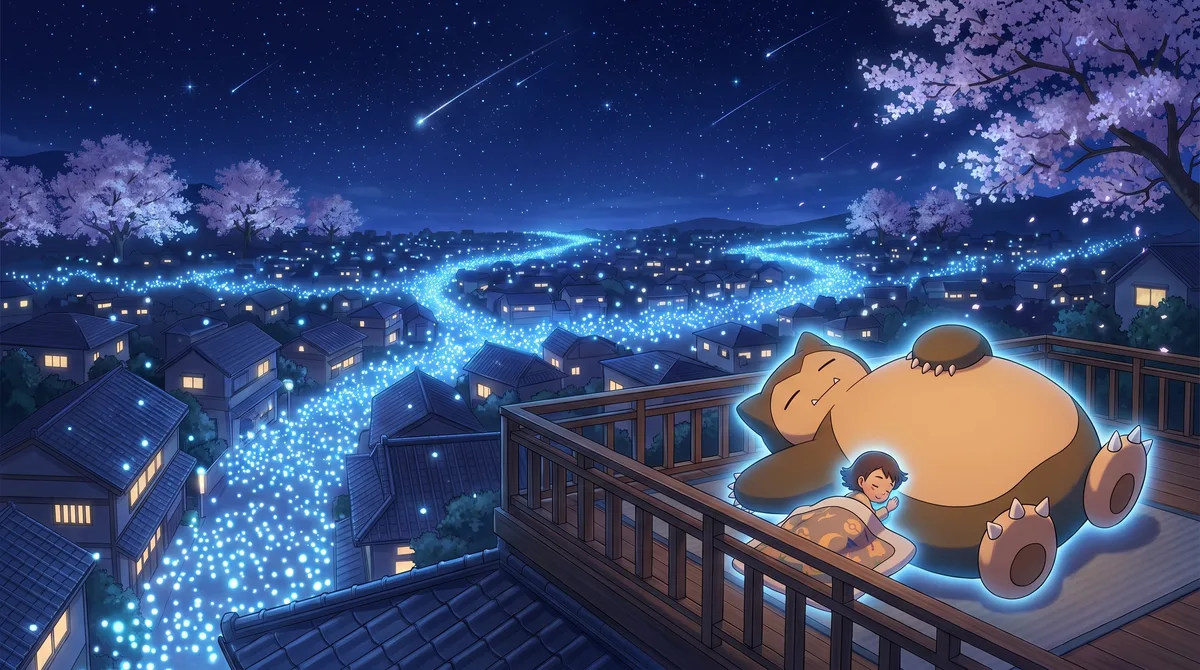
A game built around the night
Pokémon Sleep connects a recorded night with encounters with Pokémon and progression. It gives a visible form to sleep schedules and estimated sleep duration. Its appeal may lie in collecting, the morning ritual or looking at one’s habits differently.
The word “sleep” covers several measures here. A phone estimates a state from sensors and an algorithm. Polysomnography records other signals to study sleep in medicine. The game’s categories cannot automatically be equated with the stages measured in a clinical examination. Validation of another app cited in an article does not automatically validate Pokémon Sleep.
The official website presents its content as entertainment and information resources, without a diagnostic or treatment function. This distinction helps clarify what the app offers and what belongs to medical assessment. Official sleep resources.
Observational studies
Iwagami and colleagues studied 2,063 people using both Pokémon Sleep and the dietary app Asken for at least 90 days. Women made up 82.1% of the sample. Average recorded duration increased from 5.5 to 6.3 hours, and 45.3% of participants showed a favourable individual trend in total sleep duration.
This observation deserves follow-up, with its protocol in view. Participants were persistent users of two apps, without a control group. The change may reflect several factors, including habits, user selection and the way nights were recorded. It is not enough to attribute 48 additional minutes of sleep to the app in a new user. Observational study of 2,063 Sleep and Asken users, 2025.
Another study analyses data from 79,048 Japanese employees, representing more than 2.1 million nights over 28 days. It links certain sleep parameters to self-reported productivity loss at work. Its scale allows detailed observations of daily rhythms, while retaining the limitations of a cross-sectional study and a volunteer population. It does not test an improvement in work resulting from the game. Researchers’ relationships with the companies involved should be read alongside the methods; the article notably declares Masashi Yanagisawa’s paid consultancy for The Pokémon Company. Seol, 2025.
- ParticipantsPersistent users of Sleep and Asken.
- ObservationRecorded duration changes over follow-up.
- InterpretationWithout a control group, Sleep's own effect remains to be established.
A protocol mentioning Sleep
A gamification trial registration involving students mentions Pokémon Sleep alongside Pikmin Bloom in one sentence of its description. However, the registry’s arms and interventions name Pikmin Bloom. The associated 2026 publication concerns physical activity; the accessible results do not allow a sleep benefit to be attributed to Pokémon Sleep. The protocol includes sleep outcomes, but their specific results were not found in the documents consulted. Whether the Sleep component was actually implemented therefore remains undetermined. NCT06818071 registration; Liu and colleagues, 2026.
Relaxation, content and related objects
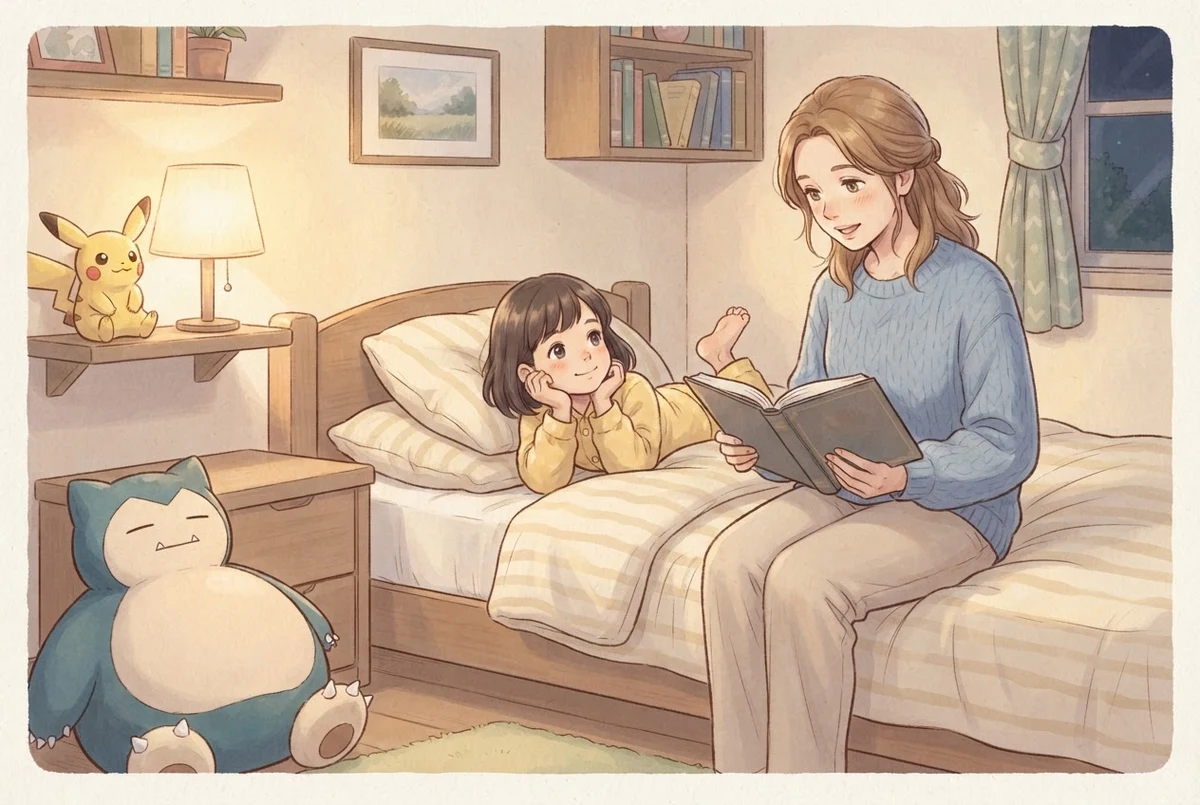
The Sleep ecosystem also includes content about rest. A 2026 announcement describes “Hoge-taiso”, muscle relaxation accompanied by the game’s world. It reports a survey of 41,832 users and a pilot with EEG measurements in twenty adults. Analysis of sleep data from 14,299 people who practised for at least three days compares a sleep-onset latency of 19.2 minutes on nights with the exercise with 19.6 minutes on nights without it.
The observed difference must be kept in proportion. The EEG pilot compares relaxation with usual habits, which could include smartphone use. The press release gives less detail than a scientific article about night ordering, allocation and analyses. It describes an experimental avenue; it does not isolate the effect of the brand or of the complete app. Company press release, 2026.
Accessories and partnerships extend recording options. Their value depends on compatibility, comfort and how measurements are obtained. A Pokémon edition of a device is an object that can be documented in the catalogue; its reach and accuracy require their own sources.
When tracking becomes a burden
For Sleep, a bedtime routine, attention to schedules and collecting characters may work together. Comparable neutral tracking would help examine the game’s contribution; a version with different characters would then allow attachment to Pokémon to be explored.
Players describe a more regular bedtime routine. Others report pressure from scores or in-game tasks. In a public discussion, some even describe recording fictitious sleep to retain rewards. These accounts do not establish how common the phenomenon is, but they raise a methodological question: a score may change because behaviour changes, or because the way the game is supplied with information changes. Players’ accounts of Sleep routines and scores.
People who work nights, have fragmented sleep or care for a child do not all have the same opportunity to follow a schedule. A future protocol would benefit from measuring perceived rest, fatigue and pressure created by tracking, alongside recorded duration. It should also include people who leave the app.