Pokémon already connects play with walking, sleep and toothbrushing. The franchise also appears in hospitals, prevention campaigns, communities and research on learning. This guide brings these connections together, distinguishes what has been measured from what has been proposed, and explores the questions that could take the work further.

Pokémon and Health is the name of this independent investigation.
Why look at Pokémon through the lens of health?
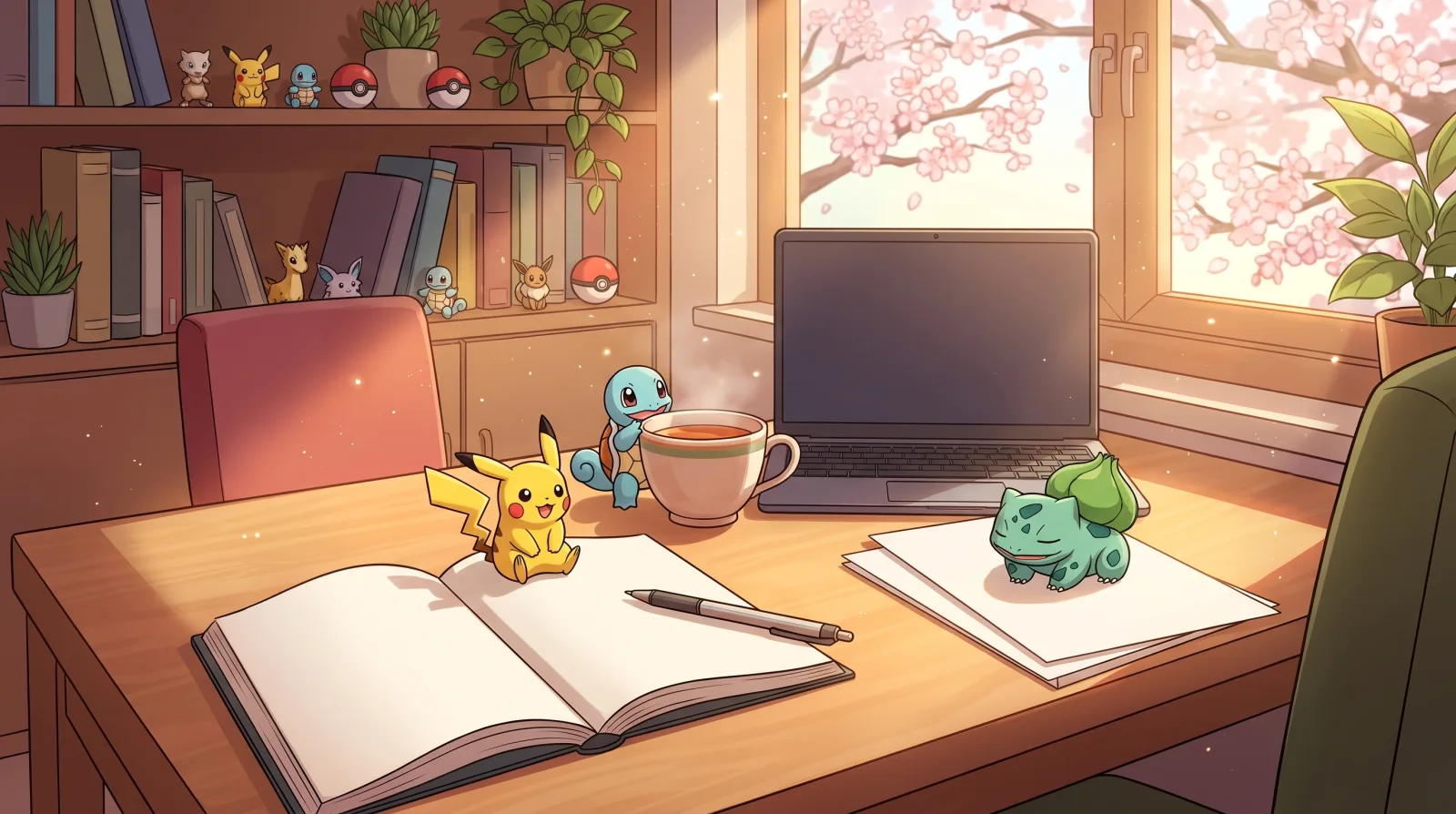
In my office, one look at my bookshelf gives away my geeky side: a few Pokémon, some Poké Balls, a little Lego. One day, someone spotted them and said with a laugh, “I didn’t know Pikachu worked in healthcare.” I laughed too. Then the phrase stayed with me.
I started looking for connections between that world and my profession. There were the familiar apps, and things I had thought less about: a video preparing children for an MRI, blood donation centres turned into PokéStops, characters used to talk about sleep. There were also scientific publications and players’ accounts, which did not always tell the same story.
I wanted to follow the subject far enough to understand its different dimensions. This investigation therefore covers the whole franchise: games, cards, objects and characters, but also what people and institutions do with them. Health here includes everyday habits, the experience of illness and the conditions in which people play.
Pokémon and Health is the name I gave this work. It is a personal investigation, independent of The Pokémon Company, Nintendo, Game Freak, Creatures and the apps’ publishers. Official connections, third-party initiatives and research proposals are identified in the text and catalogue.
What evidence means in this guide
A partnership can be confirmed without its effectiveness having been evaluated. Someone can describe an important experience without it being representative of all players. A study can find a difference between users and non-users without demonstrating that the game caused it.
For each finding, I look at what was observed, in whom, for how long and against what comparison. Download numbers tell us about reach. Steps tell us about behaviour. A dental plaque score tells us about an intermediate clinical outcome. These findings answer different questions.
The effect of the complete game and that of the brand also require separate comparisons. An experience may combine walking, goals, rewards and encounters. Understanding Pokémon’s specific contribution would require comparing sufficiently similar experiences with and without its characters. This question runs throughout the guide.
What does Pokémon specifically contribute?
When someone plays GO and walks more, several things change at once. They engage in an activity, pursue goals and may meet other players. They also reconnect with characters that may have a place in their personal history. A result measured across this whole experience cannot divide the benefit between its different components.
- The game offers goals, progression and rewards. To examine its contribution, an activity supported by these mechanics could be compared with the same activity without a game.
- The activity performed may be walking, brushing teeth or preparing for a scan. That action needs to be measured directly: a daily login or a reward earned is not enough to show that it has changed.
- Social encounters can provide a regular meeting and a reason to return. A group walk without Pokémon would help distinguish the contribution of relationships from that of the game.
- Attachment to characters may make an invitation feel familiar, awaken a memory or create a desire to care for a companion. Isolating this contribution would require keeping the activity, support and mechanics identical, then comparing Pokémon with original characters and a version without characters.
 The game
- Goals, collecting and rewards.
 Movement
- The action actually performed and its duration.
 Social encounters
- The group's presence and regular meetings.
 Attachment
- Characters, memories and preferences.
These four dimensions form a framework for interpretation, not four independently established effects. They may reinforce each other: someone comes for Pikachu, meets people, then returns for the group. The order may also be reversed. Understanding this journey would require recording motivations at the outset and over time, including among people who stop.
Sun’s comparison illustrates the question: adding GO to step goals and support is not the same as comparing Pokémon with another franchise. Research on nostalgia documents a possible relationship between memories and the experience of playing; it does not prove that Pokémon would outperform another beloved fictional world. Randomised trial adding GO to a walking programme, Sun, 2024; Study of GO, nostalgia and well-being, Wulf and Baldwin, 2020.
The question therefore becomes: for whom does this world contribute something, at what point, and compared with what alternative? Initial enjoyment, sustained participation and the health outcome each deserve their own measure. This is the thread taken up in the research proposals.
A few milestones to place the subject in context
This timeline brings together products, studies and documented uses. It shows how connections with health have diversified; it does not describe a continuous increase in medical effectiveness. Dates refer to the launch or document indicated.
1998 · Pocket Pikachu
Nintendo historical page: the release of Pocket Pikachu
Product: walking becomes part of a relationship with a companion. Nintendo dates the Japanese release to 27 March 1998. The presentation does not measure a health benefit.2011 · Measuring steps with the Pokéwalker
Step-counting comparison, Iowa State University, 2011
Research: a university presents an accuracy comparison involving 22 children and eight adults. The date is that of the press release, not the device's launch. Counting steps and encouraging more walking remain separate questions.2016 · GO and physical activity
Follow-up of 1,182 young adults after GO's launch, 2016
Research: Howe's follow-up describes changes in steps after installation, with an initial increase that fades. The mobile game becomes a subject of behavioural research.2016 · GO in a hospital care pathway
Hospital account of getting moving again, Johns Hopkins, September 2016
Use in care: Johns Hopkins describes how a team uses the game to support walking after surgery. This is an account from practice, without a clinical comparison.2020 · Pokémon Smile and toothbrushing
Japan Dental Association announcement, June 2020
Initiative: the Japan Dental Association presents its collaboration on Smile. An everyday action becomes the subject of an app; evaluations have their own protocols and dates.2025 · Studying habits with Pokémon Sleep
Observational study of 2,063 users, Iwagami, 2025
Research: an analysis of 2,063 Sleep and Asken users follows their recorded nights. Without a control group, changes do not demonstrate a causal effect of the app.


The source library specifies how thoroughly each source was read. The catalogue provides access to the objects and initiatives. Methods, documentary limitations and updates appear at the end of the guide.
Walking and moving with Pokémon
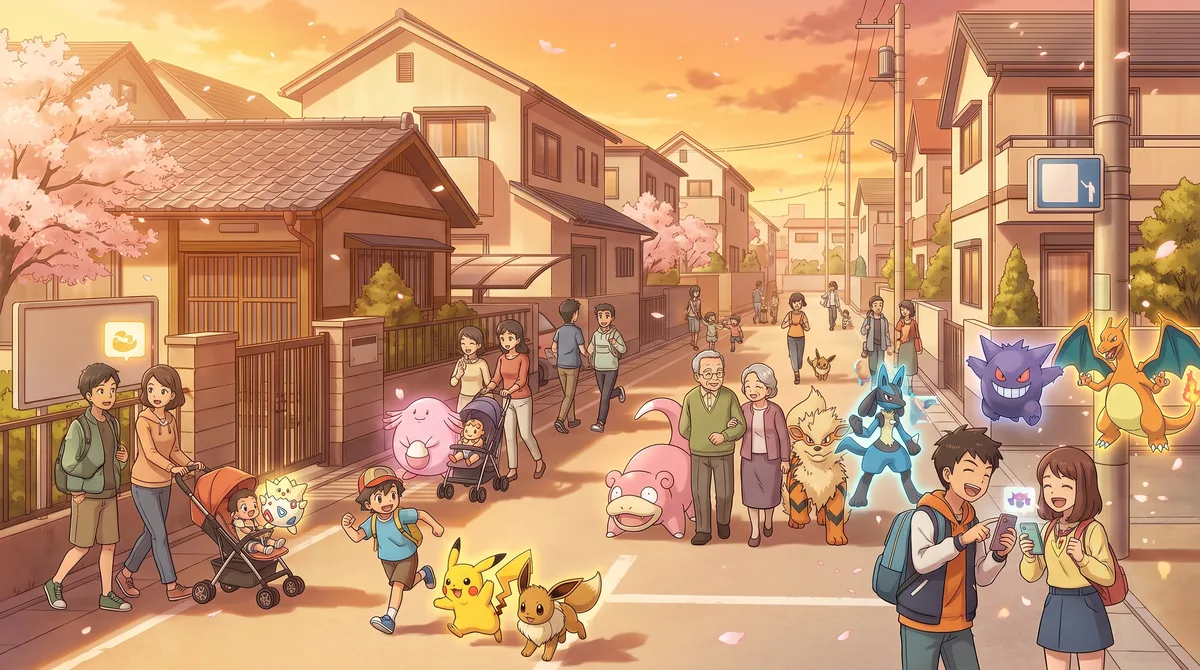
Steps become part of the game
Pocket Pikachu and the Pokéwalker preceded mobile apps. Their principle connects real movement with a companion or in-game progress. The connection is easy to understand: a walk can produce something beyond steps on a counter.
The Pokéwalker also helps distinguish two questions often brought together. Does a device count steps accurately? Does using it lead people to walk more? In 2011, an Iowa State University team reported an accuracy comparison involving 22 children and eight adults at different treadmill speeds. This work concerns instrumental measurement. The announcement said that behavioural results were still being compiled. Calling it an object that had “never been evaluated” would erase the first question; attributing a lasting benefit to it would go beyond the findings presented. Pokéwalker accuracy comparison in 30 participants, 2011.
With Pokémon GO, walking becomes part of a map and organised meet-ups. Players move to encounter creatures, reach a location or take part in an activity with others. The game thus provides several reasons to go outside, whose importance varies between players.
How many steps, and for how long?
Howe and colleagues followed 1,182 young adults, including 560 players. They reported approximately 955 additional steps per day in the first week after installation, with a confidence interval of 697 to 1,213. In this cohort, the difference returned to baseline around the sixth week. The result describes a launch effect in specific participants, using phone data reported in a survey. Step follow-up in 1,182 young adults, Howe, 2016.
Althoff and colleagues studied data from approximately 32,000 Microsoft Band users. The often-cited increase of 1,473 steps per day applies to a subgroup of highly engaged players over thirty days. It is not an average applicable to all Pokémon GO users. Players were identified partly through their online searches, adding uncertainty. Analysis of wearable data and GO participation, Althoff, 2016.
In Yokohama, Hino and colleagues compared 46 players with 184 matched non-players, all aged at least 40. Results notably suggest a relative maintenance of walking during winter. The overall interaction was significant during three of the eight months after launch. The signal lasting up to seven months concerns certain subgroups, including people aged 55–64; it does not demonstrate a uniform effect in all older or sedentary people. Comparison of 46 players and 184 non-players in Yokohama, Hino, 2019.
These studies support discussing an increase in walking in several settings. They invite separate examination of starting the game, regular participation and what remains after the initial enthusiasm. An average return to baseline can coexist with some people continuing for a long time and others stopping quickly.
What happens when the game is offered as an intervention?
A Drexel research thesis defended by Sun in 2024 provides a useful comparison. Thirty-eight people were recruited and randomised, and 32 completed the four weeks. Both groups received a Fitbit, step goals and support; one also received Pokémon GO. Superiority of the GO group in steps at week four was not statistically demonstrated.
The small sample, below the planned target, and missing data limit the result’s precision. A non-significant difference does not prove that two interventions are equivalent. The protocol measures the value of adding GO to an already active programme, rather than the difference between playing and making no changes to daily life. Sun, university thesis, 2024.
Several studies in adolescents have used apps in schools. A 2025 analysis covers 240 students allocated across four apps, including 59 to GO. Of the 29 initially inactive students assigned to GO, 13 dropped out. The programme included distance goals and encouragement through physical education grades. This context matters when interpreting engagement. The 2024 and 2025 publications associated with the same trial registration report identical allocations. They are provisionally grouped in this investigation as analyses of a probably shared cohort, to avoid counting them as independent trials. App analysis, 2025.
What walking allows us to conclude
Here, the Pokémon-specific question is what its characters add to walking and meetings between players. Comparing GO with the absence of a game is not enough to establish this.
Step counts are an interesting outcome in their own right. Discussing physical fitness, disease prevention or a benefit in patients then requires appropriate measures. Game-related walking may vary in intensity and may replace or complement other activities.
The practical question is therefore to understand for whom the game makes movement easier to start and maintain. The roles of social encounters, weather, the map, events and goals deserve to be separated. Koh and colleagues’ review maps a substantial body of work on GO; its richness also shows how much protocols and populations differ. Scoping review of Pokémon GO and health, Koh, 2026.
Sleeping and recovering with Pokémon Sleep
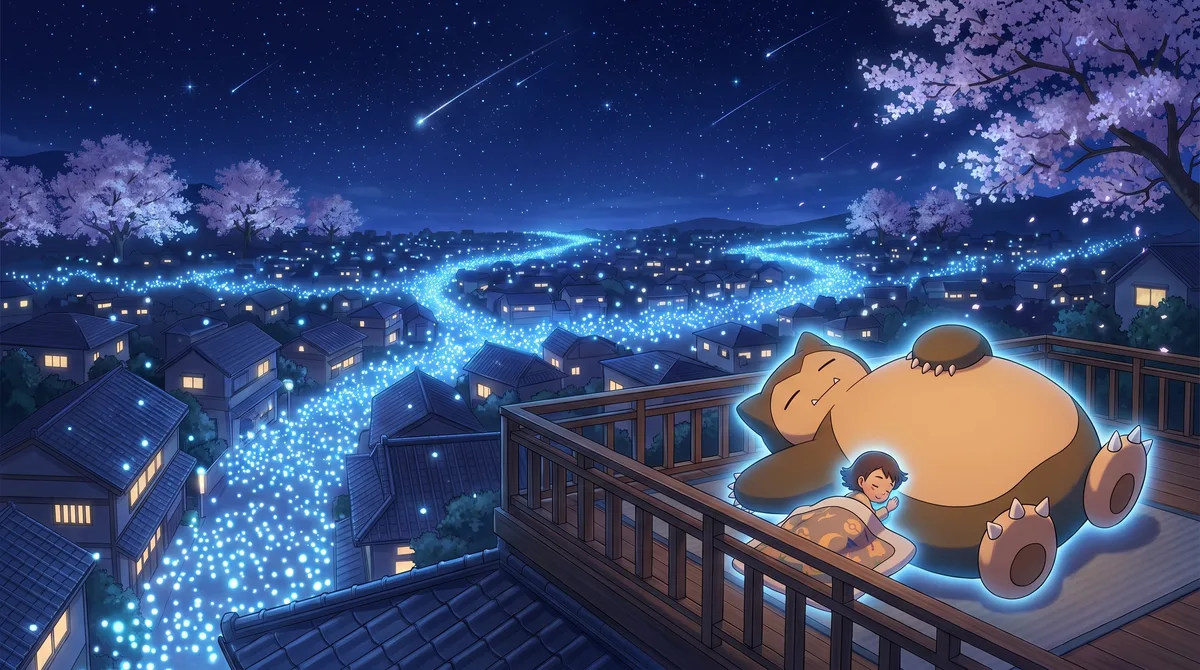
A game built around the night
Pokémon Sleep connects a recorded night with encounters with Pokémon and progression. It gives a visible form to sleep schedules and estimated sleep duration. Its appeal may lie in collecting, the morning ritual or looking at one’s habits differently.
The word “sleep” covers several measures here. A phone estimates a state from sensors and an algorithm. Polysomnography records other signals to study sleep in medicine. The game’s categories cannot automatically be equated with the stages measured in a clinical examination. Validation of another app cited in an article does not automatically validate Pokémon Sleep.
The official website presents its content as entertainment and information resources, without a diagnostic or treatment function. This distinction helps clarify what the app offers and what belongs to medical assessment. Official sleep resources.
Observational studies
Iwagami and colleagues studied 2,063 people using both Pokémon Sleep and the dietary app Asken for at least 90 days. Women made up 82.1% of the sample. Average recorded duration increased from 5.5 to 6.3 hours, and 45.3% of participants showed a favourable individual trend in total sleep duration.
This observation deserves follow-up, with its protocol in view. Participants were persistent users of two apps, without a control group. The change may reflect several factors, including habits, user selection and the way nights were recorded. It is not enough to attribute 48 additional minutes of sleep to the app in a new user. Observational study of 2,063 Sleep and Asken users, 2025.
Another study analyses data from 79,048 Japanese employees, representing more than 2.1 million nights over 28 days. It links certain sleep parameters to self-reported productivity loss at work. Its scale allows detailed observations of daily rhythms, while retaining the limitations of a cross-sectional study and a volunteer population. It does not test an improvement in work resulting from the game. Researchers’ relationships with the companies involved should be read alongside the methods; the article notably declares Masashi Yanagisawa’s paid consultancy for The Pokémon Company. Seol, 2025.
- ParticipantsPersistent users of Sleep and Asken.
- ObservationRecorded duration changes over follow-up.
- InterpretationWithout a control group, Sleep's own effect remains to be established.
A protocol mentioning Sleep
A gamification trial registration involving students mentions Pokémon Sleep alongside Pikmin Bloom in one sentence of its description. However, the registry’s arms and interventions name Pikmin Bloom. The associated 2026 publication concerns physical activity; the accessible results do not allow a sleep benefit to be attributed to Pokémon Sleep. The protocol includes sleep outcomes, but their specific results were not found in the documents consulted. Whether the Sleep component was actually implemented therefore remains undetermined. NCT06818071 registration; Liu and colleagues, 2026.
Relaxation, content and related objects
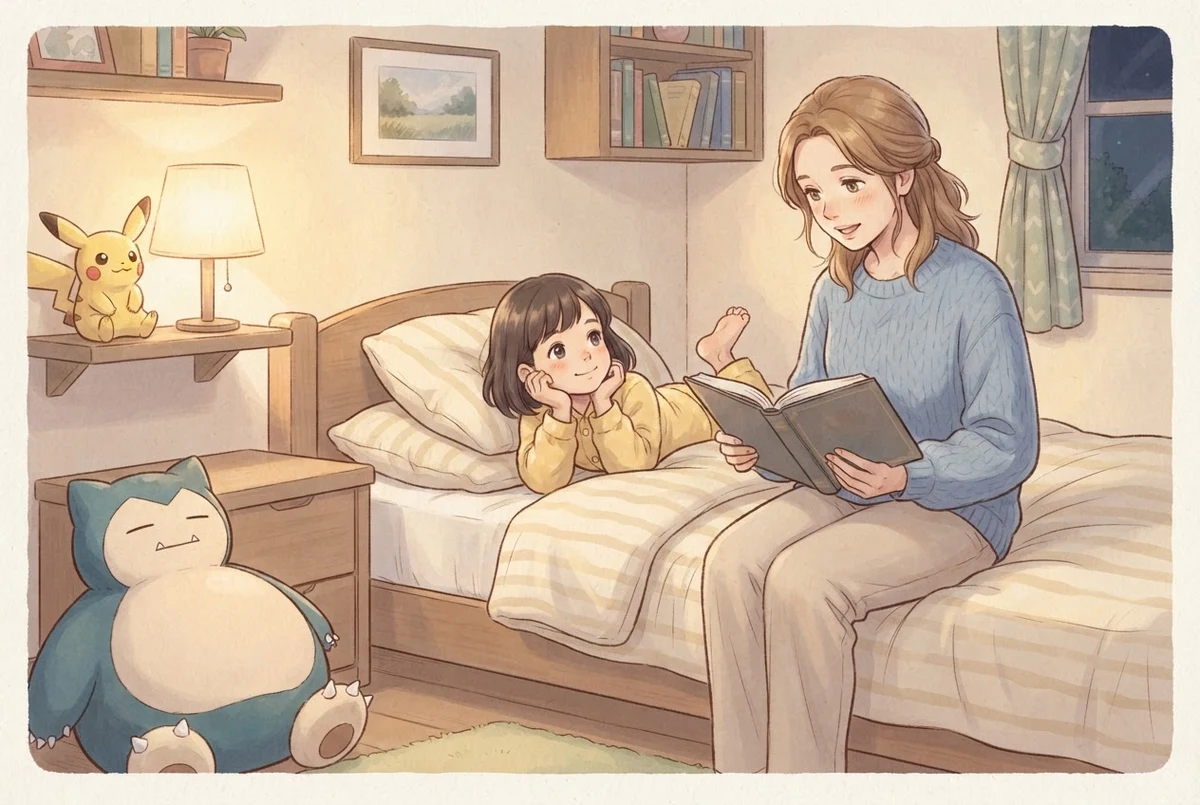
The Sleep ecosystem also includes content about rest. A 2026 announcement describes “Hoge-taiso”, muscle relaxation accompanied by the game’s world. It reports a survey of 41,832 users and a pilot with EEG measurements in twenty adults. Analysis of sleep data from 14,299 people who practised for at least three days compares a sleep-onset latency of 19.2 minutes on nights with the exercise with 19.6 minutes on nights without it.
The observed difference must be kept in proportion. The EEG pilot compares relaxation with usual habits, which could include smartphone use. The press release gives less detail than a scientific article about night ordering, allocation and analyses. It describes an experimental avenue; it does not isolate the effect of the brand or of the complete app. Company press release, 2026.
Accessories and partnerships extend recording options. Their value depends on compatibility, comfort and how measurements are obtained. A Pokémon edition of a device is an object that can be documented in the catalogue; its reach and accuracy require their own sources.
When tracking becomes a burden
For Sleep, a bedtime routine, attention to schedules and collecting characters may work together. Comparable neutral tracking would help examine the game’s contribution; a version with different characters would then allow attachment to Pokémon to be explored.
Players describe a more regular bedtime routine. Others report pressure from scores or in-game tasks. In a public discussion, some even describe recording fictitious sleep to retain rewards. These accounts do not establish how common the phenomenon is, but they raise a methodological question: a score may change because behaviour changes, or because the way the game is supplied with information changes. Players’ accounts of Sleep routines and scores.
People who work nights, have fragmented sleep or care for a child do not all have the same opportunity to follow a schedule. A future protocol would benefit from measuring perceived rest, fatigue and pressure created by tracking, alongside recorded duration. It should also include people who leave the app.
Brushing teeth and caring for everyday routines
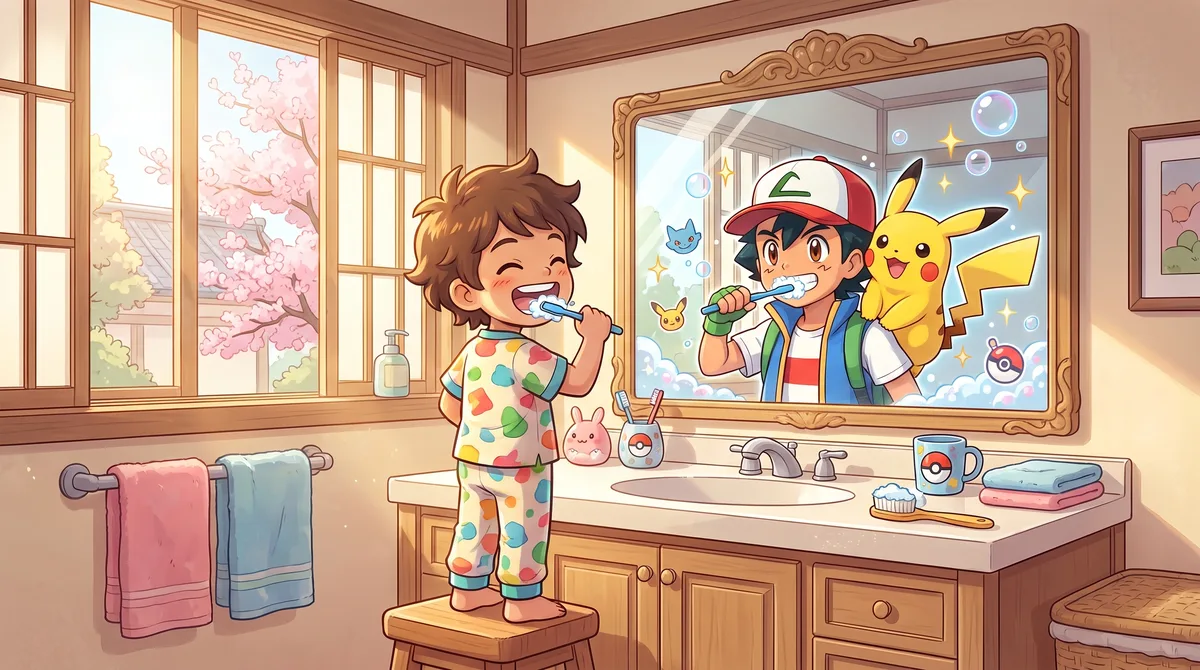
What Pokémon Smile does
Pokémon Smile uses the camera to detect the face and movements during brushing. The screen guides the user towards different areas, while the game features Pokémon to rescue. The action is paired with a timer and a collecting reward.
The Japan Dental Association contributed to the advice displayed in the app. It also highlights the parent’s role in a child’s brushing. A professional association can help develop accurate content; measuring the app’s effect then requires a study. Japan Dental Association.
The tool was developed with LITALICO. This partnership tells us about its design and the attention paid to the user experience. On its own, it does not establish particular effectiveness in people with a developmental disorder. Presentation of Smile’s development with LITALICO.
The first evaluations
A 2023 study compared brushing sessions in seven five-year-olds. It observed a statistically significant reduction in plaque after the app session, while the reduction after usual brushing was not significant. Establishing superiority, however, requires a direct comparison of changes between conditions. “Significant here, non-significant there” is not enough. The sample remains very small. Hwang, 2023.
In 2025, a study involving sixteen autistic children reported improved brushing behaviour after five days supported by caregivers. The questionnaire concerns the surfaces brushed, as reported by caregivers. It does not directly measure plaque or tooth decay. There is no control group, and the protocol excludes children with co-occurring conditions including ADHD, anxiety or depression. The result therefore cannot be extended to those situations. Putri, 2025.
A 2026 study in Depok involving 32 schoolchildren reports a reduction in plaque index after five days. The abstract describes a single group before and after use, without a control. The app, adult attention and repetition of the action cannot be separated in this protocol. Depok study, 2026.
An earlier Indonesian thesis involving thirty children assessed simulated actions using a checklist. It forms part of the history of evaluation, with the status of a thesis and the limitations of a before-and-after protocol. Fatonah’s thesis.
Another Indonesian diploma thesis, dated 2025, reports improved brushing actions in thirty students after using Smile, without a control group. The institutional abstract was read; the chapters detailing methods and results have restricted access. This signal does not demonstrate a clinical effect attributable to the app itself. Sinaga, Medan thesis, 2025.
These studies open several avenues. They do not yet answer questions about children’s independence, technical quality, gum health or cavity prevention in the same way. The guide keeps these outcomes separate.
An app within a local programme
In Fukuoka, a programme for first-year primary school pupils combines brushing, stickers applied by parents and a free dental check-up after thirty stickers. For the 2026–2027 campaign, the app is part of a broader programme that also has a paper option. The dentist, parents and participation arrangements are part of the intervention. City of Fukuoka.
This arrangement raises a different question from an individual download: does Pokémon help a family enter and continue along a prevention pathway? Participation, continuity of brushing and dental outcomes would need to be measured, also examining who uses the paper option.
Uses beyond childhood
Adults describe using Pokémon Smile to make brushing easier to start, particularly in ADHD communities. The timer and visual cues seem useful to some participants. These accounts tell us about needs and spontaneous adaptations; they do not evaluate the app as a treatment for ADHD. Accounts of Smile and brushing in an ADHD community.
Handwashing songs, toothbrushes and illustrated materials belong to the same family of connections with daily life. Their presence in the catalogue means that they exist. Fewer infections, better technique or a lasting habit would require specific measures.
Well-being, mental health and relationships
Going out, meeting people and sharing an interest
Playing can create an opportunity to meet people. Interviews with players describe connections between childhood memories, enjoyment of the game, friendships and family relationships. A qualitative investigation of GO’s features also connects several characteristics of the game with reported changes. These studies help us understand what people find in the experience. Ku, interviews; Arjoranta, critical incidents.
A seven-day diary studied by Ewell and colleagues finds associations between daily playing time, satisfaction, vitality and interactions. Daily exercise does not follow exactly the same pattern. An enjoyable social experience and increased physical activity are therefore two outcomes to examine separately. Ewell, 2019.
Among Japanese workers, a retrospective cohort reports a small favourable difference in psychological distress among persistent players. The association is interesting, with a modest effect size. It remains vulnerable to baseline differences, self-reporting and selection of people who continue playing. Watanabe, 2017.
Does the game do better than a walk?
Alloway and Carpenter studied one hour of Pokémon GO and one hour of walking without a phone in a crossover protocol. Negative affect decreased after the GO session. However, the comparison of changes between conditions was not statistically significant: the condition × time interaction had a p-value of 0.297.
The faithful wording is therefore a decrease observed after GO in this small study, with superiority over walking not demonstrated. The study also does not show an improvement in empathy. It illustrates the value of an active comparator: going out, walking and changing surroundings can already alter the experience of the moment. Alloway and Carpenter, 2019.
When participants are patients
A survey in a community mental health service collected 93 responses, a response rate of 13%. Two people reported that GO benefited their activity and mental health. This survey places the game among possible patient uses; it does not test its effectiveness as a psychiatric intervention. Rowntree, 2019.
Scientific letters have also proposed examining GO among young people experiencing marked social withdrawal. A clinical proposal deserves discussion as such. The records found are not enough to announce a validated treatment for hikikomori. Kato and colleagues; Tateno and colleagues.
At another scale, a time series in Hong Kong observes a reduction in presentations for self-harm after the game’s launch. Whether the people concerned played is unknown. Contemporary changes and contextual factors may contribute. A population-level signal does not establish that playing protects an individual against suicide. Wong, 2020.
The conditions for a welcoming community
A meeting between players may be valued for the people present as much as for the franchise. It would be useful to understand whether Pokémon facilitates first contact, continued meetings or both.
Relationship quality matters as much as the number of relationships. A group can give a place to an interest long experienced alone. It can also be demanding, competitive or exclusionary. Interviews with neurodivergent players published on YouTube present both sides: belonging and confidence for some, exploitation of skills or exhaustion for others. These are selected accounts from which frequency cannot be inferred. Interviews, huskystar77, 2026.
One research avenue would be to follow welcoming practices, forms of cooperation and the possibility of participating at one’s own pace. The mere existence of a community measures neither a reduction in loneliness nor its ability to support all its members.
Attachment, memories and emotions
What we love about a companion
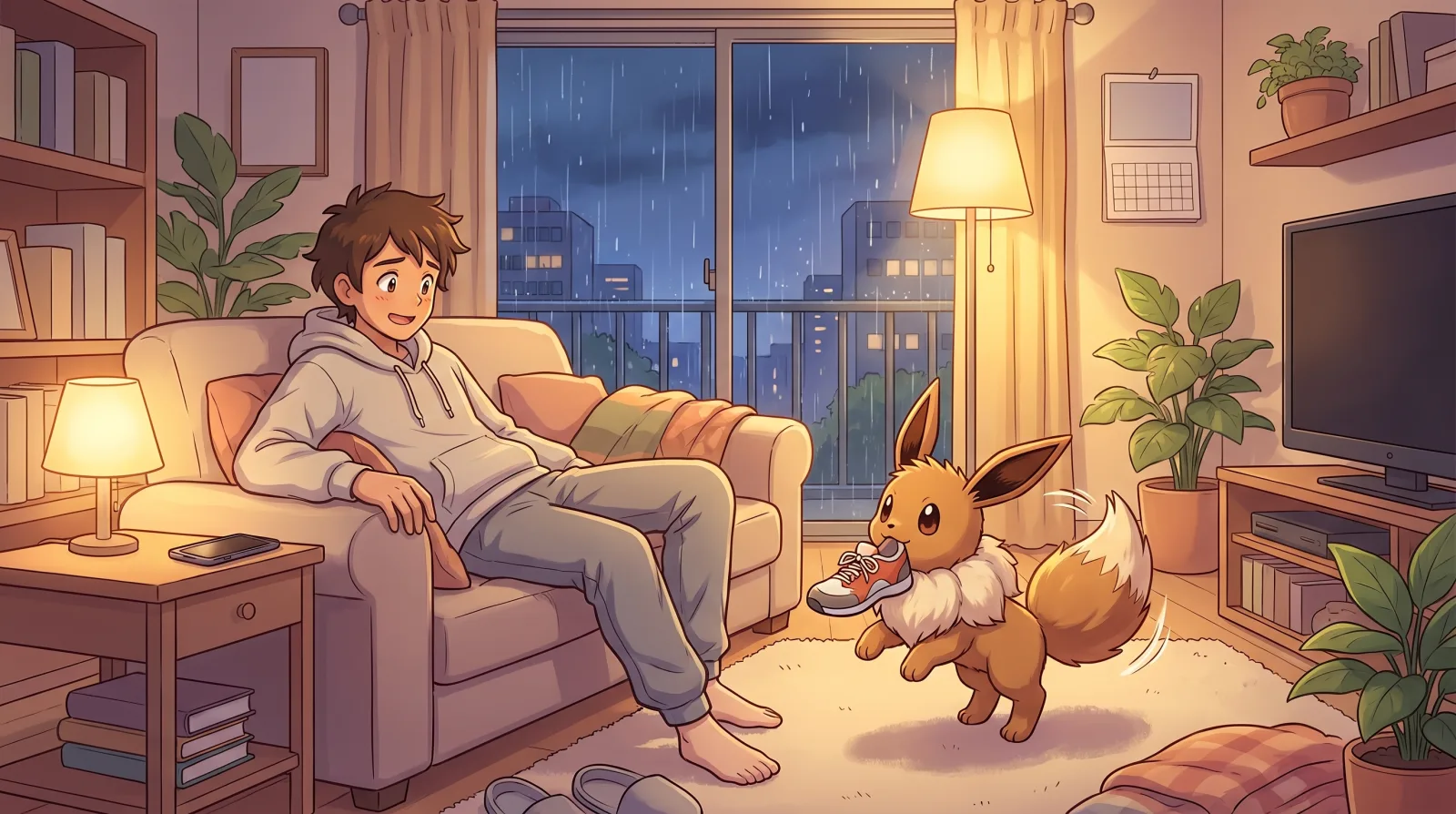
A Pokémon may recall a first game, an encounter or a period of life. We may love its appearance, the effort invested in helping it progress or the role it played in a team. These experiences are subjects of study in themselves, even when they lead to no health goal.
Surveys of GO connect nostalgia with the meaningfulness of the experience and, indirectly, certain dimensions of well-being. The authors emphasise the causal limitations of their analyses. A statistical relationship between memories, enjoyment and well-being does not show that the same result can be produced by adding a character to an app. Wulf and Baldwin, 2020.
Another survey, involving 230 adults, finds that stronger childhood attachment to characters is associated with greater nostalgia and lower current playing frequency. This finding qualifies the idea that attachment alone is enough to sustain participation. It does not refute every motivational role for attachment: childhood memories, a bond with a current creature and enjoyment of a group activity are not the same measure. Frolich and colleagues.
Faces we understand
Jennings asked thirty adults to judge Pikachu expressions and photographs of a human face. The study concerns how observers assign emotional valence and intensity to images. It opens a question about familiar expressive materials. It measures neither improved emotional recognition in children nor a therapeutic effect in autism. Jennings, 2019.
Characters can be used to talk about an emotion. Evaluating such a tool would then require examining what a person learns, can express or can reuse outside the session. Adults recognising a drawn expression is only one possible step in that reasoning.
Loss in a story and in a game
Voluntary Nuzlocke-style rules make the loss of a companion permanent. In a video account, a player describes attachment built through nicknames, a sense of responsibility and regret after losing a Pokémon. He also discusses the time spent preparing his team. OutOfCharacters’ account.
This experience can be emotionally real while remaining different from grieving a person or animal. The account can inform reflection on loss, memory and rituals. It does not demonstrate a grief therapy or the activation of particular brain circuits.
Psychological readings of characters require the same precision. Interpreting a story through trauma, anxiety or acceptance is an act of interpretation. Discussing a canonical diagnosis or clinical intervention requires other evidence. The guide leaves room for interpretations while indicating their status.
Mechanisms to test
Collecting, rewards, goals and social support can help describe an experience. A taxonomy of behaviour change techniques, such as BCTTv1, provides vocabulary for coding interventions. The presence of a technique, however, does not measure its effectiveness. Its absence from a description does not prove the absence of a spontaneous process among players. Methodological work on BCTTv1 coding.
The project’s exploratory coding of GO is therefore treated as content analysis, to be documented and reproduced. It is not used to mechanically explain the decline observed in a 2016 cohort, especially as the game has changed since then. Hypotheses about dopamine, identity or durability require their own measures.
Neurodiversity, disability and accessibility
Start with people and how they use the games
An interest in Pokémon can provide a shared topic, a familiar structure or an opportunity to show one’s knowledge. Accounts from autistic people and people with ADHD help formulate concrete questions: what makes an activity easier to start, helps someone understand an instruction or makes an exchange more comfortable? Answers may differ greatly from one person to another.
It is useful to distinguish a personal adaptation from an evaluated intervention. Accounts about Smile can guide the design of a study in adults with ADHD. The small study in autistic children does not directly answer this question, particularly because it excluded co-occurring ADHD.
A bibliographic confusion deserves mention. Grelotti’s study, often associated with Pokémon and autism, concerned a boy whose special interest was Digimon. Pokémon appeared in the protocol for a comparison participant. It does not demonstrate therapeutic effectiveness of Pokémon in autism. Grelotti, 2005.
The map and the body
Research on players with physical disabilities combines a survey of sixty people with workshops involving six participants. It describes enjoyment, relationships and opportunities for escapism, but also constraints involving distance, speed, time limits and repeated actions. Avatar representation is also part of the experience. Accessibility study, 2023.
These obstacles are not limited to the ability to walk. Fatigue, transport, a location’s accessibility and the group’s pace can determine participation. The same arrangement may be accessible one day and difficult the next.
Players describe adaptations according to their physical possibilities and mobility aids. Their accounts reveal uses that an average step count misses. They do not prove that the experience is accessible to everyone sharing a diagnosis. Player account, 2026.
Reading, hearing and controlling the game
Accessibility also concerns games that do not depend on walking. Pokémon Access provides scripts to read text, maps and positions in certain early-generation games. TCGLiveAccess offers adaptations for the digital card game, with keyboard commands and a screen reader. These are concrete community initiatives, to be described according to the versions supported. Pokémon Access; TCGLiveAccess.
The existence of an adaptation does not guarantee that it is easy to install, sustainable or suitable for every disability. A useful evaluation would involve the people concerned in ordinary situations and measure independence as well as technical access.
The right to play for its own sake
A person may love Pokémon without wanting to improve their health. Turning every game into an activity or skills programme could reduce the freedom leisure brings. In this investigation’s exploratory proposals, the choice to participate and the possibility of stopping form part of the outcome to observe.
This also applies to non-fans. A tool based on a familiar franchise may be enjoyable for some and uninteresting to others. An inclusive health proposal must retain alternatives that do not require liking Pokémon.
From tournaments to sensory needs
Play! Pokémon publishes an inclusion policy describing organisers’ and participants’ responsibilities regarding discrimination and harassment. Sensory resources also describe event conditions, personal items to bring and access to a quiet room. The document consulted names London’s ExCeL: its provisions should not automatically be attributed to every tournament. Inclusion policy; sensory guide consulted.
These documents provide concrete points to examine: information available before travelling, required badges, human assistance and the option to leave a noisy space. A published policy and an actually accessible experience are two outcomes to follow. Participant feedback helps bring them together.
Cognition, learning and connections with the living world
Expertise in familiar characters
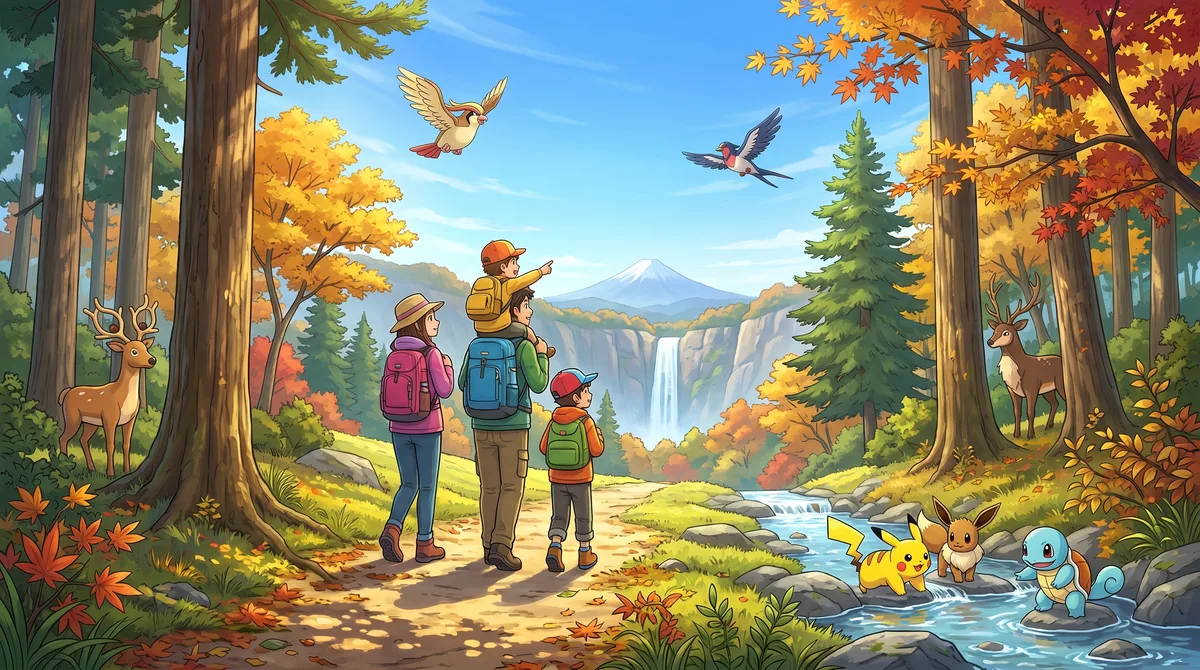
In 2002, Balmford and colleagues compared recognition of Pokémon and real species in 109 British children aged four to eleven. The result shows the place cultural expertise can occupy in a child’s knowledge. It tests neither teaching biodiversity through Pokémon nor transferring that knowledge to local species. Balmford, 2002.
Familiarity is also of interest to memory research. Experiments by Xie and Zhang show that already familiar characters can be retained in larger numbers or consolidated faster in certain visual memory tasks. The advantage concerns familiar stimuli. It does not mean that prescribing play would improve general memory or prevent dementia. Visual memory, 2017; consolidation speed, 2017.
Gomez and colleagues studied visual cortex responses in adults who had played Pokémon extensively during childhood and in novices. Their results inform our understanding of the organisation of specialised responses. The small sample and retrospective nature of the expertise do not justify claims of superior intelligence, a medical benefit or a new architecture in all players. Gomez, 2019.
Learning with a game that takes people outside
A study by Ruiz-Ariza and colleagues followed 190 adolescents for eight weeks, with a GO group and a comparison group. It observed improvements in certain measures of attention, concentration and sociability. The accessible abstract does not allow random assignment to be confirmed. Ruiz-Ariza, 2018.
In 123 Taiwanese students followed for ten weeks, Hsieh and Chen also report favourable results on several dimensions. Memory, well-being and self-control did not improve significantly in their analyses. These mixed findings make an outcome-by-outcome description useful, alongside better-controlled trials to clarify the roles of the game, movement and school context. Hsieh and Chen, 2019.
Pokémon can therefore serve as a setting for studying expertise or as material for an educational activity. Transfer beyond the game remains a separate question: remembering species, understanding a concept, cooperating in class and improving a clinical cognitive function require different outcomes.
Fiction as the starting point for a scientific question
The creatures invite us to observe shapes, compare categories and ask which animals they resemble. The games also contain stories about pollution, energy and relationships between humans and environments. An analysis of these themes in games from 1996 to 2023 documents their presence in the stories. It does not measure their effects on players’ environmental behaviour. Alcott and Maavara, 2025.
A reflection published in 2026 following a museum visit proposes using fans’ expertise as a starting point for biological reasoning. The author also highlights the gaps between fiction and science. A Pokémon that “evolves” transforms as an individual; biological evolution concerns populations over generations. The analogy becomes useful when that difference is explained. Eden, 2026.
An educational project could start with a creature, identify its natural inspirations, then go out to observe the living world. Claiming an educational benefit would require measuring what is understood and retained. Discussing environmental health would require following a further step, with its own behaviours and outcomes.
Tools inspired by Pokémon
At the University of Idaho, an instructor describes Medimon, a world of creatures representing, among other things, cells, organs and diseases. It is an example of adapting collecting mechanics and visual forms for education. It is a Pokémon-inspired creation, distinct from an official franchise programme. The teaching account is not a controlled comparison of learning. University presentation of the Medimon educational project.
This distinction avoids attributing every tool that uses the idea of collecting creatures to Pokémon. It also raises an interesting question: how much of the appeal comes from the mechanics, and how much from an already familiar world?
Pokémon in care, hospitals and cancer-related settings
Preparing for an MRI
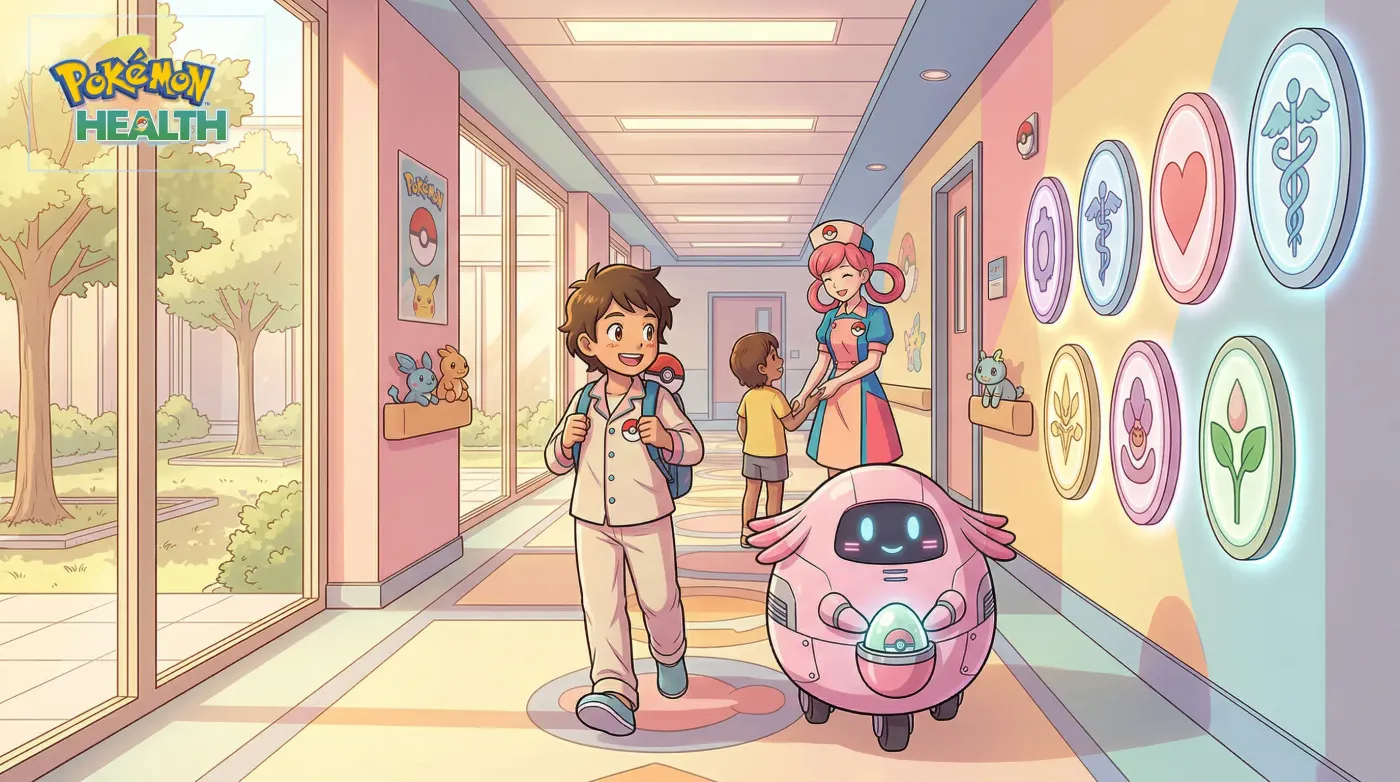
Preparation material may be useful through its explanations, sounds and human support. The characters’ contribution would require comparison with equivalent material: the same content, duration and presentation conditions.
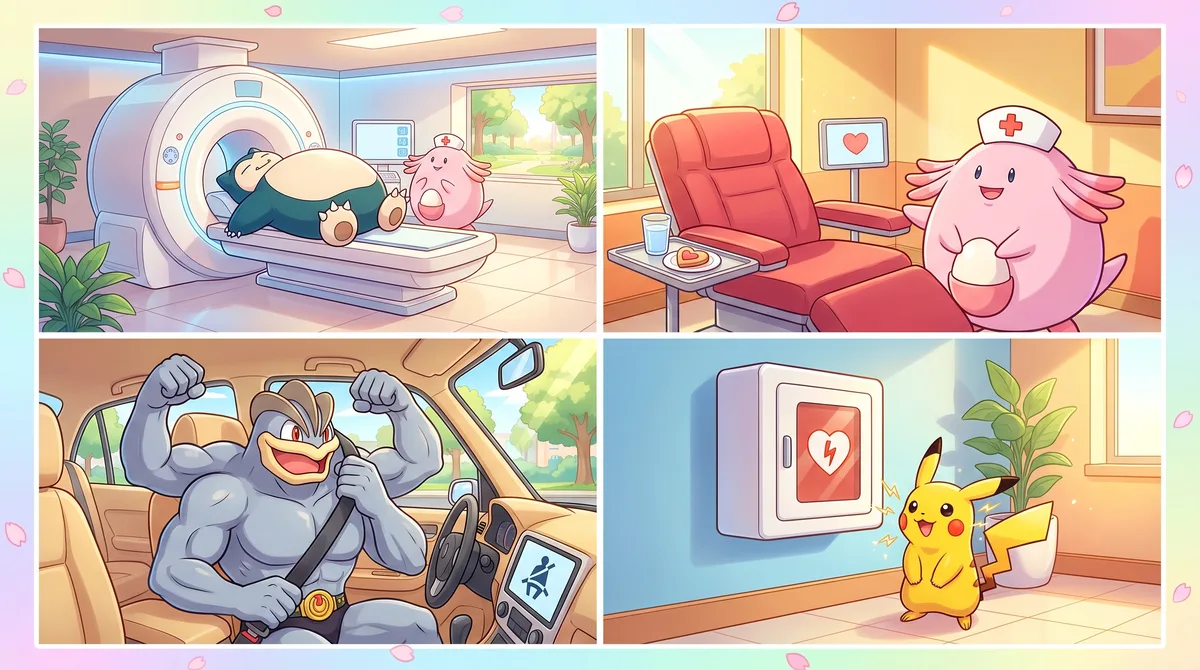
Canon Medical and The Pokémon Company designed a video to prepare children for an MRI. It notably uses real examination sounds and a presentation from a child’s eye level. Characters help explain staying still and the issue of metal objects. The document describes a concrete resource built around the conditions of the examination. Presentation of the Pokémon MRI preparation video, Canon Medical.
Canon’s paediatric page also presents an ultrasound resource. Both resources are documented by the manufacturer; the ultrasound video was not watched during this research. Canon paediatric resources.
Accounts accompanying this kind of project may describe easier examinations. To measure the effect, a protocol should specify age, anxiety, image quality, repeated sequences and sedation arrangements. The video could be compared with equivalent preparation without Pokémon. The result would also depend on the team’s support.
The catalogue therefore distinguishes the resource’s verified existence, healthcare professionals’ experience and evaluated outcomes. This makes it possible to document a promising use without attributing a reduction in sedation that has not been measured in a study presented here.
- HearReal sounds from the examination.
- UnderstandThe importance of staying still during the examination.
- PrepareAn explanation about metal objects.
Distraction during a dressing change
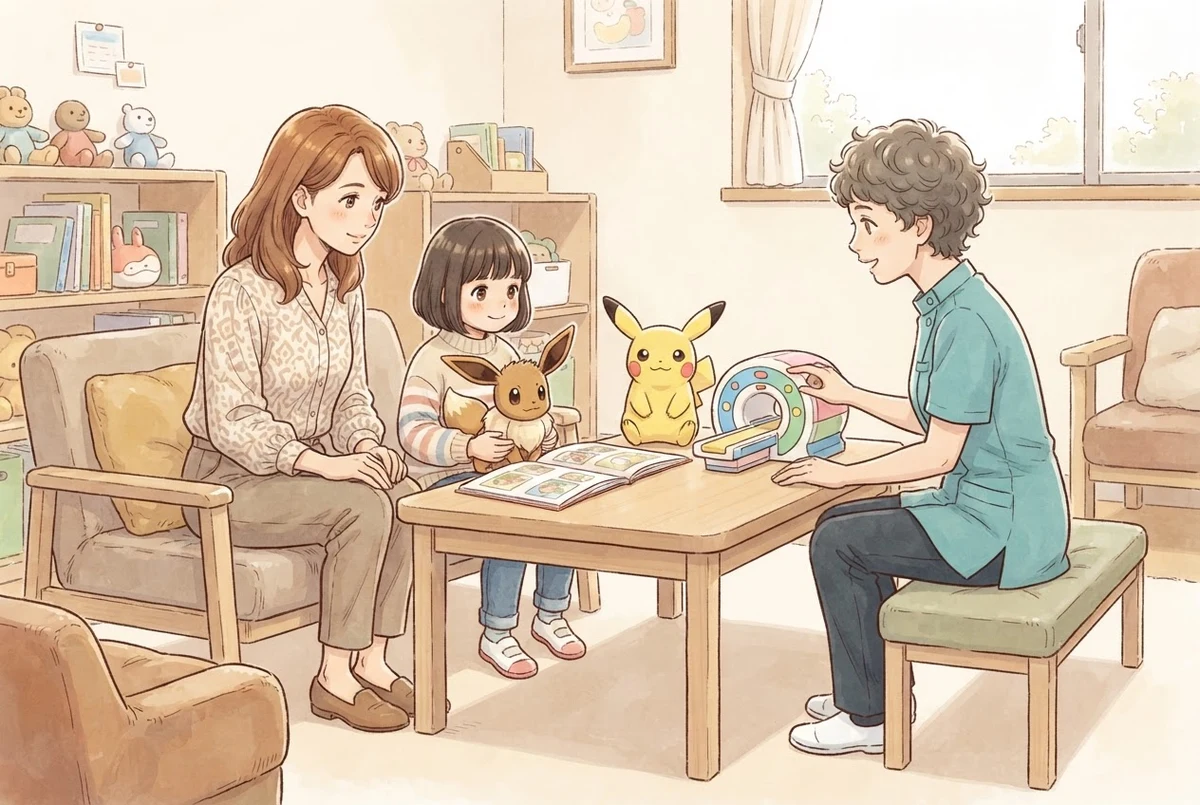
A 2024 paediatric nursing publication describes fifty children aged five to twelve after abdominal surgery, divided into two groups of 25. The experimental group used an augmented-reality Pokémon game for ten minutes during dressing changes. The authors report favourable results for pain and comfort. Sasi, 2024.
Reading the text calls for several qualifications. Assignment was not randomised, the game version was not identified and analgesia management was insufficiently detailed. The reported mean pain score in the control group exceeds the usual range of the cited CHIPPS scale. Aggregation across the two days might explain this, but it is not specified. The guide therefore retains the existence of this exploratory study without repeating its effect magnitude as a reliable finding. Original CHIPPS description.
The question deserves more precise evaluation: does a game adapted to the procedure, age and patient’s position improve their experience compared with another distraction or usual care? The team must be able to interrupt the activity, communicate with the child and provide care under appropriate conditions.
Supporting a return to movement
Johns Hopkins described the use of GO with a young patient after surgery, with staff observations about walking, distraction and relationships. This story shows how a team can integrate a personal interest into everyday hospital life. It does not measure a reduction in length of stay attributable to the game. Account of getting moving again in hospital, Johns Hopkins, 2016.
In a rehabilitation study, the expected outcome would be more specific: mobility, function, pain, fatigue or independence, depending on the situation. The effects of human encouragement, walking and the game would also need to be distinguished. Findings in healthy players do not automatically transfer to the postoperative period.
Resources for paediatric facilities
Pokémon Illust Lab provides illustrations to eligible organisations, including paediatric facilities, under its terms of use. This resource documents organised access to visual materials. It is neither blanket permission to use all Pokémon intellectual property nor a clinical evaluation of the illustrations. Pokémon Illust Lab.
To understand their value in a department, one could study the readability of an instruction, preparation for an appointment or the child’s experience. These objectives do not all require the same measure. The starting point remains the resource’s function in a concrete situation.
Cancer: separating prevention, support and treatment
Connections with cancer take several forms. A campaign may use interest in GO to remind players about sun protection. Donations may support children’s hospitals. A patient may play during treatment. These facts are not evidence of an anticancer effect.
In 2016, the Israel Cancer Association published a campaign for GO players about sun exposure, hydration and safety. The document is a historical source on a prevention initiative. Its advice must be placed in its period and is not reproduced here as a set of up-to-date medical recommendations. Prevention campaign for GO players, Israel Cancer Association, 2016.
The Pokémon Company International is also listed among the sponsors of a Toy Foundation fundraiser for play programmes in children’s hospitals. The total raised does not isolate Pokémon’s contribution or establish specific funding for cancer research. The Toy Foundation announcement, 2024.
Two other initiatives directly concern mobilisation around cancer. Stand Up To Cancer describes a collaboration with Niantic and a week-long activation in GO in July 2024. The 2024 Catch a Million campaign describes a community fundraiser for St. Baldrick’s, which funds childhood cancer research. The first is a partnership described by the organisation; the second does not establish an official partnership with The Pokémon Company. The pages read do not quantify benefits for patients. Stand Up To Cancer; Catch a Million.
Mott Children’s Hospital also described GO use among hospitalised children in 2016, including a child with cancer. The report describes movement and interactions, with attention to other patients’ privacy. It documents use in practice, without constituting a clinical trial. Michigan Medicine.
For oncology uses, exploratory questions may concern the experience of care, relationships, adapted activity or quality of life. Tumour outcomes belong to another level of research. No connection presented in this guide supports recommending Pokémon as a cancer treatment.
Food and everyday products
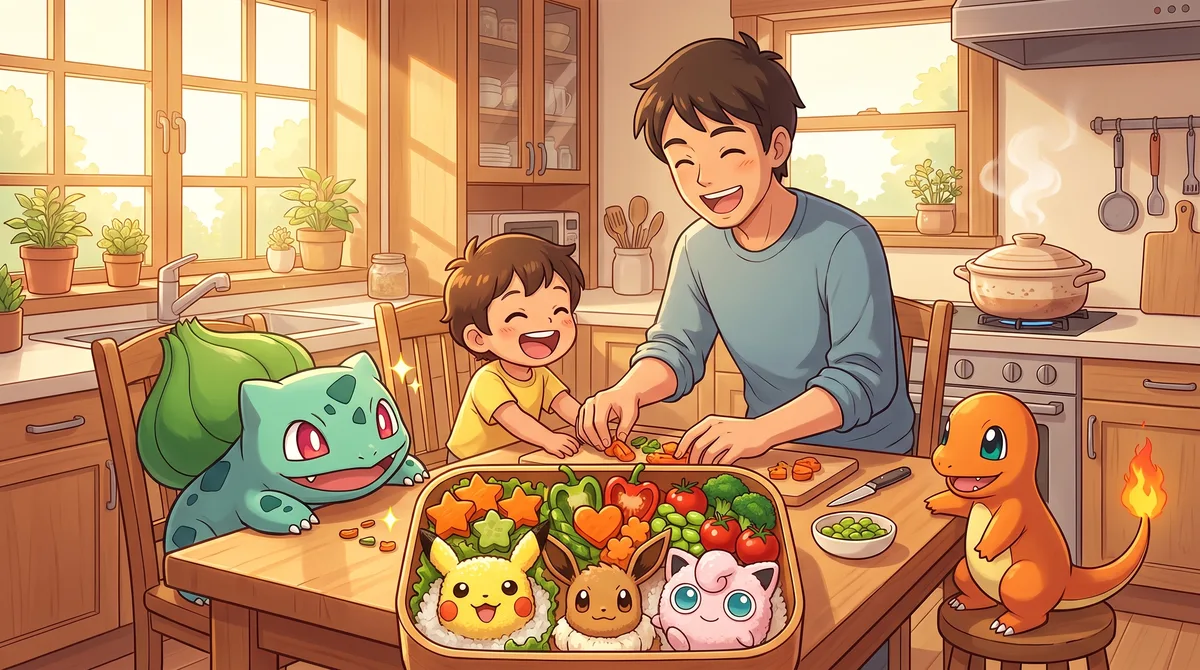
Recipes, meals and welcoming spaces
The franchise may appear in recipes, food products or meal-related initiatives. These connections need examining according to their function. A character on packaging is a commercial use. A cooking workshop is an activity. A community dining space welcoming children also addresses access and social interaction.
The POKÉMON with YOU Foundation notably describes its support for children’s community dining programmes. Its activity report documents the organisation and actions delivered. Understanding the effect on diet or well-being would require indicators beyond the number of events and participants. 2023–2024 activity report.
Food education and cooking also take concrete forms: a Japanese book of 36 recipes with a bento box, Oisix Pokémon Café ReMix family kits and Sleep recipes adapted by asken nutritionists. The book is known here through its bibliographic record, and the kits and recipes through their creators’ announcements. These sources describe culinary offerings without measuring nutritional effects. Book record, 2011; Oisix, 2024; asken, 2025.
A study based on 4,825 Pokémon Sleep and Asken users brings together food records and sleep parameters. It explores associations between diet and sleep in this population. It does not evaluate a dietary change caused by Pokémon. The apps serve here as data sources. Seol, 2025.
Do characters influence food choices?
An experiment involving 124 children used food scenes from eleven series, including Pokémon, before offering on-screen food choices. Results concern the whole compilation and conditions studied. They do not allow a Pokémon-specific effect to be attributed or establish how much food was actually consumed. Villegas-Navas and colleagues, 2019.
To study the brand, the same product could be compared under different presentations, followed by measurement of actual choices and their repetition. For a cooking activity, skills, enjoyment of cooking and diet over time would be more relevant. Both questions belong in a health investigation without automatically sharing conclusions.
Toothbrushes, eye drops, vitamins and sun protection
Health and hygiene products officially use Pokémon. The catalogue includes REACH Kids toothbrushes, Rohto Digieye Pikachu eye drops announced in Taiwan and Orthomol vitamin editions in Korea. Their existence broadens the subject beyond apps. REACH; Pokémon announcement in Taiwan; Orthomol announcement.
Licensing, product properties and the character’s effect are three separate pieces of information. A commercial presentation does not demonstrate that a player needs vitamins or that eye drops protect against every effect attributed to screens. Advertising claims do not become medical conclusions of this investigation.
The collaboration between Anessa and Pokémon provides another example, with sunscreen packaging. The offering and associated messages can be documented. To establish whether characters improve real-life protection, purchasing, application, reapplication and exposure would need studying. Shiseido announcement, 2025.
The same reasoning applies to food products. A Pokémon’s presence establishes neither nutritional benefit nor harm. The product, consumption and population concerned need examining.
Public health, institutions and places
Talking about sleep with familiar characters
Japan’s Ministry of Health appointed Nightcap Pikachu and Snorlax as sleep ambassadors in 2025. The campaign draws on their familiarity to make the subject visible, particularly among young people. Japan’s Ministry of Health.
The 2026 resources notably include a paper theatre about Snorlax’s dream for local authorities, and materials about sleep habits. These are concrete awareness-raising methods, distinct from measuring improved nights of sleep. Campaign resources.
Eisai also announced a sleep-awareness book for waiting rooms, alongside other patient materials. The organisation, distribution setting and educational purpose are identifiable. The effect on knowledge or behaviour would require its own evaluation. Eisai announcement.
Rewards in an insurance programme
Sumitomo Life Vitality connects weekly activity goals with GO rewards for eligible members. Programme points may also contribute to changes in the annual premium. This partnership combines an insurance programme, an activity measure and a game reward. Vitality presentation.
Evaluating it would require distinguishing what each component contributes, specifying who can participate and following people who do not meet the goals. An attractive reward may help people enter the programme; its specific effect on health or inequalities does not follow from the announcement.
Donating blood and locating a defibrillator
In 2022, 45 blood donation centres in Japan’s Kanto Koshinetsu region were announced as PokéStops, with Chansey and associated in-game elements. The operation uses a game location to make a health setting more familiar. Being near a centre, entering it and actually donating remain different stages. Japanese Red Cross.
A partnership with the Japan AED Foundation provides for PokéStops connected to locations equipped with defibrillators. The 2026 announcement distinguishes an initial set of approximately one thousand locations in Tokyo from a target of approximately thirteen thousand across Japan. This investigation does not present the target as a fully verified rollout. Announcement of GO’s partnership with the Japan AED Foundation.
Knowing a marker on a game map, being able to physically locate the device and being able to use it in an emergency are successive outcomes. Measuring them would clarify what the campaign actually contributes.
Support after a disaster
The POKÉMON with YOU Foundation’s activities include visits, supplies and support for places welcoming children. Its 2023–2024 report also describes booklets intended to provide emotional support after the Noto earthquake. The report documents these activities; it does not measure clinical effectiveness for stress or post-traumatic stress disorder. Foundation report.
Local programmes, events and Pokémon-related facilities may also create opportunities to go out and meet people. Their purpose may be tourism, culture or social life. An indirect connection with health deserves exploration using appropriate outcomes, without turning every local activity into a health intervention.
Moving and meeting in collective programmes
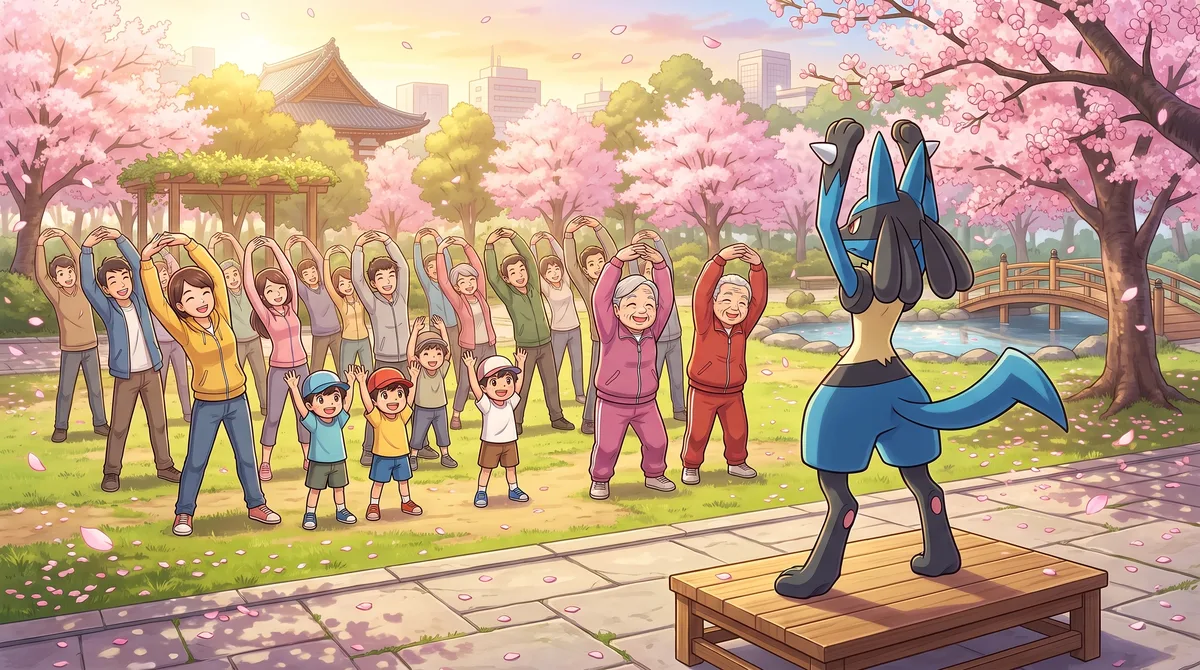
In Japan, Lucario has accompanied Japan Post Insurance’s radio exercises since a 2022 announcement. Approximately ten million attendance cards were planned for that year: this is an announced volume of materials, not a number of active participants or an established annual distribution. Kampo announcement.
In Singapore, the Health Promotion Board used Pokémon items in the National Steps Challenge. A 2021 campaign with NParks notably offered key rings after 56,000 accumulated steps. The official terms describe an incentive mechanism; they do not measure the characters’ contribution to activity. Move for SG56 terms.
In the United Kingdom, Summer of Play brought Pokémon to 144 National Trust locations in 2026, with GO activities at 27 sites. A wheelchair-accessible trail is described at Winkworth. This information concerns that particular trail, without guaranteeing identical accessibility at every site. Official presentation, August 2026.
The newsletter of a municipal centre for preventing loss of independence in Minato describes a smartphone gaming group in 2026 using GO, among other games, to encourage interaction. This case gives older people a place in the catalogue. It demonstrates neither dementia prevention nor a partnership with the publisher. Centre newsletter, spring 2026.
Inspired initiatives and official partnerships
A hospital or association may draw on a game’s imagery in a campaign without an official Pokémon partnership. Hospital Clínic Barcelona, for example, presented a vaccination campaign for staff using its mascot and a GO-inspired approach. The catalogue classifies it as the institution’s initiative; it does not infer a Pokémon licence. Hospital Clínic Barcelona, 2016.
This precision also applies to statements by public authorities. A 2016 Public Health England article discussed GO’s possibilities and called for better evaluation. It does not document a refusal of partnership. Public Health England.
Cards, collecting and communities
Several practices behind the same card
A card may be a game tool, a memory, an object to trade or a collecting purchase. Situations differ between a family game, a tournament, buying a specific card and repeatedly opening randomised packs. A health guide must retain these distinctions to understand positive experiences and risks.
Opportunities for relationships and learning deserve study: understanding rules, explaining a strategy, negotiating a trade or finding a place in a group. Their plausibility does not remove the need to measure any transfer to other situations. Personal accounts can guide questions without establishing frequency or causality.
Randomised purchases and spending
A 2025 survey of 1,961 card game players in English-speaking Western countries examines spending on physical and digital packs. Spending correlates with measures of problem gambling, with associations of differing strength depending on the purchase type. The data cover several card games and do not isolate Pokémon. They do not show that buying a pack causes a disorder. The analyses also find no negative association between the spending studied and mental health. Xiao and colleagues, 2025.
A 2026 audit of fifty card products in Hong Kong found that 80% did not display probabilities. Pokémon was among the brands studied, but the proportion concerns all products. The finding concerns transparency in randomised purchases, not the prevalence of addiction among collectors. Lo and colleagues, 2026.
The amount spent, the possibility of choosing a card, resale expectations and the pleasure of opening a pack are distinct dimensions. Studying them together would help clarify situations in which collecting remains a chosen leisure activity and those in which it becomes difficult to regulate.
Watching people play and open cards
The franchise’s environment also includes videos and streams. A study of Twitch accounts devoted to Pokémon cards analysed 1,025 active streamers. It found content involving the consumption or promotion of alcohol, cannabis or tobacco among 257 of them. This indicates potential exposure in the sample studied. The work does not measure viewers’ consumption and does not describe official promotion of these substances by Pokémon. Nali and colleagues, 2025.
A reference guide can therefore examine products and the media environment in which people discover them. A publisher’s responsibility, a content creator’s responsibility and a viewer’s experience are not interchangeable.
Conditions of use, safety and personal data
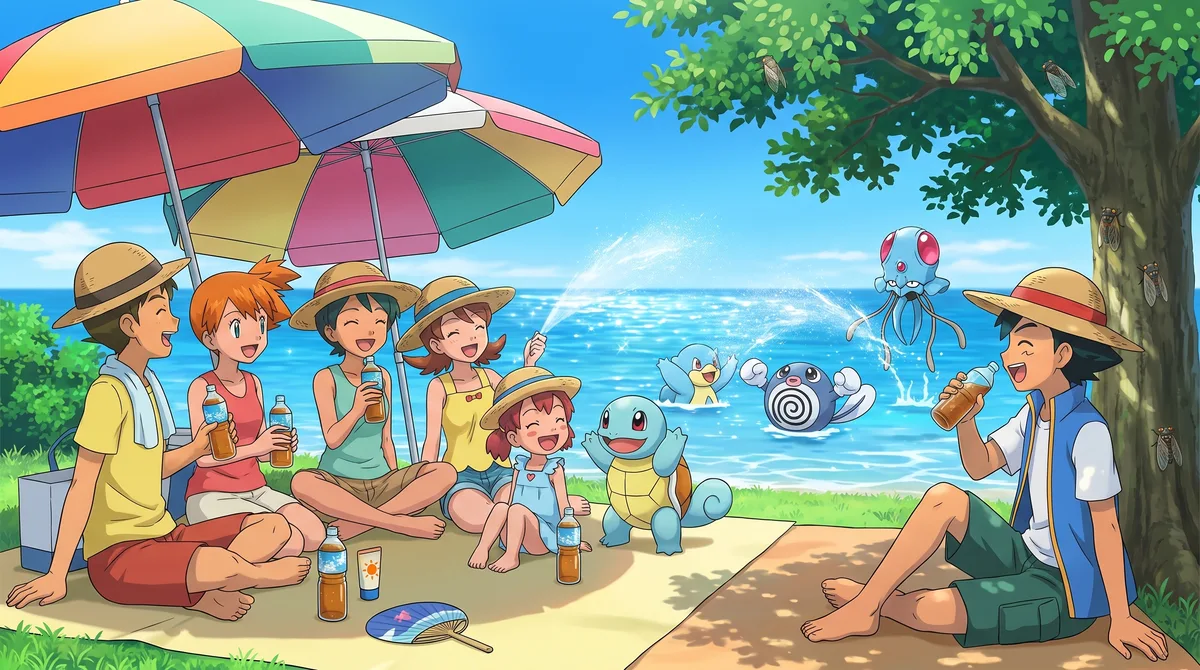
Walking in a real environment
A game map overlays roads, public spaces and local constraints. Distraction, heat, sun exposure and route accessibility depend on that encounter. A recommendation to play needs to consider the place and the person, rather than an abstract distance.
Research in medical records identified adverse events and reported benefits associated with GO. Selecting records that mention the game does not allow a risk to be calculated for all players. A proportion within these selected records is not population incidence. Healthcare encounters associated with GO.
Conversely, an analysis of road deaths in Japan found no significant change attributable to the game’s launch during its observation window. This national-level finding does not remove the individual risk of distraction. The two studies ask different questions. Japanese road safety analysis.
Light, screens and the 1997 episode
The broadcast of the animated episode associated with Porygon in 1997 forms part of Pokémon’s medical history. Studies distinguish seizures, other reported symptoms and sensitivity to certain visual stimuli. Not every report after the broadcast corresponds to a diagnosed epileptic seizure. Clinical investigation of symptoms after the Porygon episode; photosensitivity study.
An experimental study in 25 photosensitive people compared original and filtered sequences and measured EEG responses. It provides information about the stimulus’s properties and prevention of visual risk in this population. It does not provide a risk rate applicable to every current Pokémon game or video. Parra, 2005.
This history is important to document precisely. It does not justify attributing the same risk to a printed card, a toothbrushing app and a flashing animated sequence.
Pressure, sleep and problematic use
A passion can occupy a great deal of time without constituting a disorder. Questionnaire studies sometimes distinguish harmonious and obsessive passion, with different associations with motivations and difficulties. They do not replace a diagnosis. Study of passion for GO.
A Polish cross-sectional survey notably describes players reporting that they sacrifice sleep or consider themselves addicted. These responses are experiential data from a volunteer sample. They do not provide a clinical prevalence among all players. Survey, 2025.
Workshops with twenty adult players interested in health also reveal tensions between goals, enjoyment and relationships. Group meetings can be enjoyable while becoming difficult to reconcile with other responsibilities. Intervention design must make room for these trade-offs. Kim and colleagues, CHI 2020.
Accessory-specific safety
Manufacturer instructions need checking for each accessory. For Pokémon GO Plus +, Nintendo asks people using a pacemaker or defibrillator not to use the product: its magnets and transmitter may interfere with these devices. Nintendo also says not to use it while driving or cycling and to remove the charging cable during sleep. These instructions concern this specific accessory. Nintendo instructions for GO Plus +.
Data: a different answer for each product
Pokémon GO uses location to make its geographical world work. The Scopely Explore policy, effective since 20 August 2026 when read, also describes activity data and how background tracking works when users enable it. It states that data obtained through Apple HealthKit or Google Fit are not used for marketing or advertising. Data shared with other players also need examining in the service’s settings and policy. Scopely Explore privacy policy for GO.
For Pokémon Sleep, audio recordings and sleep data follow different paths. Support documentation states that sounds remain on the device and are not sent to servers. They remain available for a limited time. Sleep data, by contrast, are backed up on servers. Some information may be shared with friends, with adjustable options. According to the documentation consulted, reducing this sharing does not reduce community rewards. Audio recordings; data and sharing.
For Smile, the documentation specifies that video is used to detect the face and movements and is neither stored nor sent to a server. Photographs used for decoration remain on the device. These statements concern those specific functions; they do not mean that the app processes no other data. Pokémon Smile support.
Policies and versions change. Use in a study or healthcare organisation would require rechecking the product’s terms, the data needed and consent arrangements appropriate to the context. This guide documents the material consulted at its research date; it is not a compliance audit.
A global scope, local situations
The scientific data presented mainly come from certain countries, often with volunteer populations. Access to a phone, network, dense map and safe locations varies. Available languages, schedules and affordable spending also influence the experience.
For example, a 2023 V2EX discussion describes network difficulties encountered with Sleep in China. It records a situation at a particular date, without establishing general unavailability in 2026. V2EX discussion of network difficulties with Sleep, 2023.
These contexts must remain visible when discussing a global franchise. A favourable experience in a group of urban players does not automatically address the circumstances of a rural family, an older person or someone who has never played.
Exploratory directions for further research
Isolating what Pokémon contributes
The first question runs across products: what changes when Pokémon is present while the mechanics stay identical? A comparison could use the same care-preparation resource, exercise or routine, with a Pokémon world, an original world and a version without characters.
Prior familiarity, preferences and expectations would need measuring. A fan, a child discovering the franchise and someone who dislikes it may react differently. The aim would be to understand the conditions of an effect, allowing for it to be absent or unfavourable in some situations.
Following what happens after the beginning
For GO, questions notably concern sustaining movement and the role of relationships. For Smile, they concern independence, technique and dental outcomes. For Sleep, they include regularity, perceived rest and measurement validity.
A study lasting several months should follow people who stop as well as those who remain. It would distinguish game use from the desired behaviour after stopping. Someone who leaves the app but keeps a regular walk follows a different path from someone who logs in every day without changing their activity.
Designing with the people concerned
People with disabilities or chronic illnesses can describe constraints not captured in the game’s goals: variable fatigue, pain, toilet access, transport or the need for breaks. Families can explain the real place of an app in an already busy routine.
Exploration can begin with interviews and usability trials before an effectiveness protocol. The possibility of refusing, choosing another activity and asking for help must be planned. Enjoyment and a sense of freedom are outcomes to collect, not simply tools to encourage adherence.
Evaluating uses in care
Preparing for an MRI, distraction during a procedure and returning to movement call for distinct protocols. Outcomes must fit the situation: understanding, anxiety, cooperation, pain, fatigue or examination quality. Comparators may be usual care or an equivalent distraction resource.
Practical conditions also need describing: who presents the material, when it is used, how long it takes and what it requires of the team. An intervention may be appreciated without improving a clinical outcome, or improve an outcome while creating a workload that is difficult to sustain. Both pieces of information matter.
Understanding collective programmes
Campaigns about brushing, sleep, blood donation or defibrillators allow public health questions to be asked. Who sees the message? Who participates? Which behaviour changes? Does the outcome vary by resources, age or location?
The comparison must consider the whole programme. A Pokémon campaign supported by a local authority cannot be compared uncritically with a standalone poster. Staffing and practical opportunities to act may explain part of the result.
Studying meaning without reducing it to treatment
Bonds with companions, memories and stories of loss can be studied for what they represent. Interviews, observation and cultural analysis have a place alongside trials. They answer different questions and can help design more appropriate measures.
One avenue concerning the living world could compare what children retain after a Pokémon-based activity and after equivalent material. An avenue concerning emotions could examine what a character helps someone express. One concerning cards could distinguish enjoyment of play, relationships and purchasing pressure. Each proposal retains a precise outcome rather than a general promise of “feeling better”.
Questions to turn into protocols
The proposals below are my research directions, developed from this investigation. They are neither programmes announced by Pokémon nor care recommendations. They form an exploratory agenda. Choosing sample sizes, primary outcomes and duration would require methodological work with the people concerned. They do not describe already validated interventions.
 Isolating the characters' contribution
For whom, and in what situation? Fans and people with little familiarity with Pokémon, invited to the same short activity.
What I propose to explore. Offer the same material with Pokémon, original characters or no characters; keep instructions, rewards and support identical.
How could its value be assessed? Measure familiarity and preferences before the trial, then the choice to participate, enjoyment and desire to return. Distinguish these outcomes from any improvement in health.
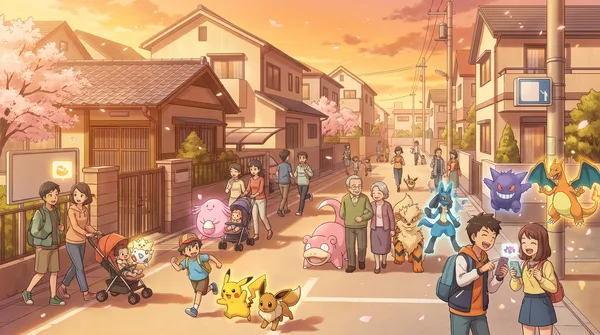
Sustaining a walking habit
For whom, and in what situation? Adults who want to walk more, in a neighbourhood with accessible routes.
What I propose to explore. Compare walks of similar duration and support, with GO or without a game; examine solo and group participation separately.
How could its value be assessed? Follow steps using a common measure, intensity, social encounters and fatigue over several months. Recontact people who stop and check whether walking continues without the game.
 Supporting toothbrushing
For whom, and in what situation? Children and families who want to make a brushing routine easier.
What I propose to explore. Compare Smile with support of the same duration, including demonstration and a timer. A comparison with another game world would then be needed to isolate the brand.
How could its value be assessed? Observe technique and independence, record the burden on parents and plan an appropriate dental assessment. Time spent with the app does not replace brushing quality.
 Understanding sleep tracking
For whom, and in what situation? Adult volunteers with varied schedules, describing work and family constraints.
What I propose to explore. Compare Sleep with neutral tracking requiring similar effort, using an independent measure common to both groups.
How could its value be assessed? Follow schedules, perceived rest and fatigue, but also score pressure and recordings that do not correspond to sleep. Include dropouts in the analysis.
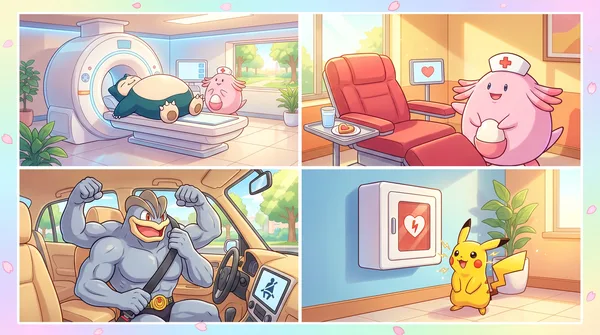
 Preparing for an examination
For whom, and in what situation? Children scheduled for an MRI, with their parents and the teams welcoming them.
What I propose to explore. Starting from the existing resource, study preparation with or without familiar characters, with equivalent explanatory content and support.
How could its value be assessed? Record the child's understanding, anxiety and experience, as well as repeated sequences and staff time. Sedation decisions belong to clinical care; report them in context without presuming a reduction.
Supporting a procedure or a return to movement
For whom, and in what situation? Patients whose team already offers distraction during a procedure or adapted activity after care.
What I propose to explore. Develop two distinct protocols: Pokémon distraction versus another enjoyed distraction; supported activity with or without a game, within limits defined by the team.
How could its value be assessed? Choose outcomes specific to each situation: experience and pain for the procedure; mobility, fatigue and independence for movement. Also record interruptions and workload.
 Understanding a collective invitation
For whom, and in what situation? People targeted by a local campaign, including those who do not participate.
What I propose to explore. Compare invitations with or without Pokémon, keeping access to the service, staffing and distribution channels the same.
How could its value be assessed? Measure who is reached and who actually acts, costs and differences between locations or groups. Seeing a poster is not enough to demonstrate a change in behaviour.
 Designing with different needs
For whom, and in what situation? People with disabilities or chronic illnesses, and relatives concerned by a particular use.
What I propose to explore. Start with interviews and trials offering several activities to choose from; adapt breaks, controls and participation arrangements with participants.
How could its value be assessed? Record obstacles, fatigue, enjoyment and freedom to refuse. Describe for whom an adaptation works before considering an effectiveness comparison.
 Learning to observe the living world
For whom, and in what situation? Children taking part in an educational activity in the same school or community setting.
What I propose to explore. Compare a session connecting Pokémon with real species with an equivalent session without that reference, using the same content and duration.
How could its value be assessed? Assess what is recognised and retained at a later date, as well as transfer to species not presented. Distinguish remembering characters from remembering the living world.
Expressing an experience through a character
For whom, and in what situation? People wishing to talk about emotions or memories in a voluntary interview setting.
What I propose to explore. Let participants choose a Pokémon character, another familiar reference or no material, then explore what that choice helps them tell.
How could its value be assessed? Analyse the accounts and perceived ease, with participants' consent. This qualitative approach explores meaning; it is neither treatment nor a measure of therapeutic effectiveness.
Distinguishing card play, relationships and purchases
For whom, and in what situation? Card players of varied backgrounds, meeting in a club or local group.
What I propose to explore. Observe sessions with borrowed cards and comparable playing opportunities, then ask separately about enjoyment of play, collecting and spending.
How could its value be assessed? Follow interactions, the sense of welcome and purchasing pressure. Group participation alone cannot attribute an effect to the cards or the brand.
These questions connect a cultural intuition with observations that can be debated and reproduced. A null response, one that varies between people or an unfavourable one remains a useful result for choosing subsequent uses.
Methods, sources and updates
How this investigation is built
The starting point is the work already gathered in the project: texts, scientific notes, an inventory of 104 entries and research on cancer, attachment, emotions and the living world. Additional multilingual research was conducted in September 2026, then brought together with this corpus.
The searches used scientific databases, search engines and institutional sources. Accounts and uses were also sought on YouTube, Reddit, X, Facebook, Instagram, V2EX and Bilibili, alongside reading pages, feeds and GitHub resources. The protocol’s twelve channels are recorded in the research log. They offer neither equal richness nor equal access.
Queries and reading mainly used English, French and Japanese, with searches in Chinese and sources in other languages, notably Indonesian and Korean. This linguistic scope is broad without representing every publication worldwide.
Selection prioritises original sources: an article, an organiser’s document, an institutional page or an account by its author. A review helps map a field and locate its studies. A press release establishes what an organisation announces, with particular attention to results not yet published in a scientific journal.
What is counted
The historical inventory mixed products, programmes, events and publications. Entries overlapped, and some brought together several objects. The catalogue retains their relationships and provenance. It does not present the 104 entries as 104 independent health interventions.
The library counts documents. Two analyses of the same cohort remain two publications, with a link to their common origin. An official page, a press report and a video describing the same operation do not become three independent confirmations of effectiveness.
The depth of reading is indicated: relevant full text, partial reading, abstract or document only identified. An inaccessible source is not presented as fully audited. References identified but not read can guide future research; they do not support a clinical conclusion on their own.
How claims are reviewed
Review checks figures and conclusions against the population, protocol and outcome actually studied. It also checks distinctions between correlation and causation, interpretation of non-significant findings and possible cohort overlap.
This work led to corrections of several formulations in the initial corpus. The Pokéwalker’s accuracy had been measured, even though a lasting benefit remained to be established. The brushing study in autistic children measured reported behaviour, not plaque. A study sometimes associated with Pokémon and autism primarily concerned Digimon. These corrections are part of the investigation and its revision log.
AI tools helped search, organise and cross-check sources. Independent passes were used to identify omissions and check the scope of wording. This is neither external clinical validation nor peer review. No external expert interview was conducted during this pass.
The ambition of completeness
My ambition is to bring together the most complete investigation possible into Pokémon and health. This means following favourable uses, negative findings, risks and open questions, including when they shift the starting idea.
The dated comparison examines scientific reviews, books and institutional resources. Several syntheses cover GO in great depth. This guide also seeks to connect Sleep, Smile, objects, prevention initiatives, care and cultural experiences. Breadth of scope and strength of evidence remain two distinct dimensions.
The comparison is not an exhaustive global ranking. Paid content, unindexed material or publications in other languages may complement this work. Methods and sources are made visible so readers can check what is covered and extend the investigation.
Keeping corrections alive
The research date appears at the beginning of the investigation. An update should identify new sources, what they change and corrected wording. Changes to an app, campaign or data policy should be dated separately from earlier scientific findings.
For further reading, the catalogue of objects and initiatives brings together documented cases and the library provides access to sources. The Pokémon and Health page presents the origins of this investigation and the different reading paths.
The phrase I heard in my office has taken me well beyond the bookshelf. It still interests me for what it opens up: understanding the place a familiar world can take in actions, relationships and moments of care.