
Isolating what Pokémon contributes
The first question runs across products: what changes when Pokémon is present while the mechanics stay identical? A comparison could use the same care-preparation resource, exercise or routine, with a Pokémon world, an original world and a version without characters.
Prior familiarity, preferences and expectations would need measuring. A fan, a child discovering the franchise and someone who dislikes it may react differently. The aim would be to understand the conditions of an effect, allowing for it to be absent or unfavourable in some situations.
Following what happens after the beginning
For GO, questions notably concern sustaining movement and the role of relationships. For Smile, they concern independence, technique and dental outcomes. For Sleep, they include regularity, perceived rest and measurement validity.
A study lasting several months should follow people who stop as well as those who remain. It would distinguish game use from the desired behaviour after stopping. Someone who leaves the app but keeps a regular walk follows a different path from someone who logs in every day without changing their activity.
Designing with the people concerned
People with disabilities or chronic illnesses can describe constraints not captured in the game’s goals: variable fatigue, pain, toilet access, transport or the need for breaks. Families can explain the real place of an app in an already busy routine.
Exploration can begin with interviews and usability trials before an effectiveness protocol. The possibility of refusing, choosing another activity and asking for help must be planned. Enjoyment and a sense of freedom are outcomes to collect, not simply tools to encourage adherence.
Evaluating uses in care
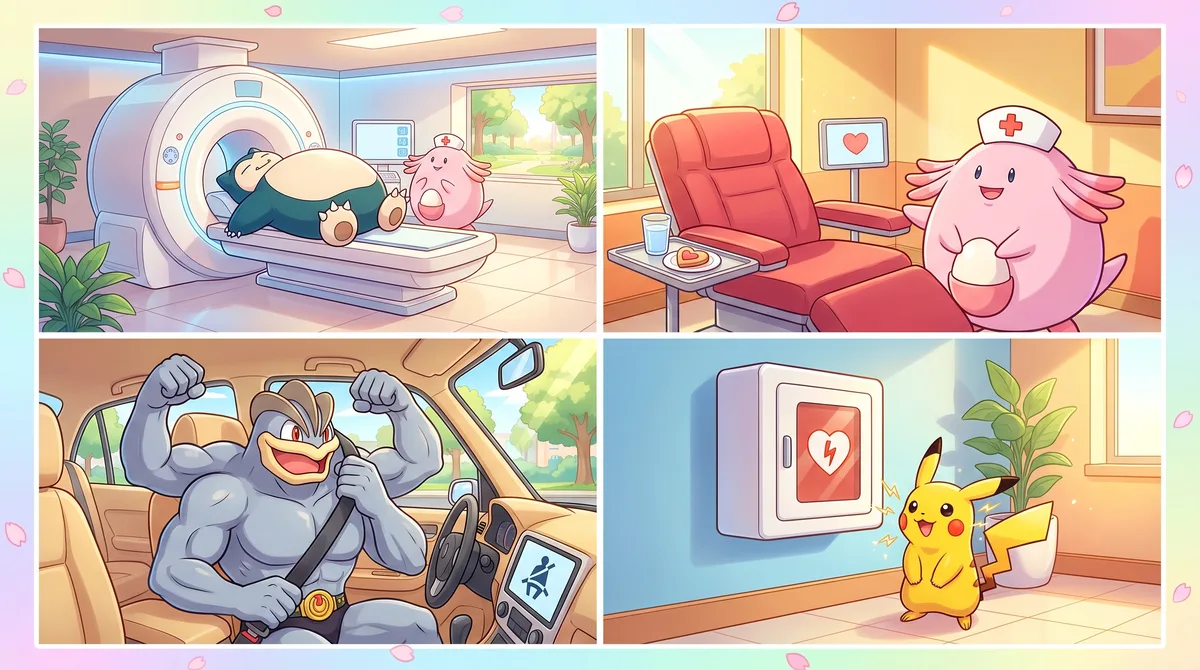
Preparing for an MRI, distraction during a procedure and returning to movement call for distinct protocols. Outcomes must fit the situation: understanding, anxiety, cooperation, pain, fatigue or examination quality. Comparators may be usual care or an equivalent distraction resource.
Practical conditions also need describing: who presents the material, when it is used, how long it takes and what it requires of the team. An intervention may be appreciated without improving a clinical outcome, or improve an outcome while creating a workload that is difficult to sustain. Both pieces of information matter.
Understanding collective programmes
Campaigns about brushing, sleep, blood donation or defibrillators allow public health questions to be asked. Who sees the message? Who participates? Which behaviour changes? Does the outcome vary by resources, age or location?
The comparison must consider the whole programme. A Pokémon campaign supported by a local authority cannot be compared uncritically with a standalone poster. Staffing and practical opportunities to act may explain part of the result.
Studying meaning without reducing it to treatment
Bonds with companions, memories and stories of loss can be studied for what they represent. Interviews, observation and cultural analysis have a place alongside trials. They answer different questions and can help design more appropriate measures.
One avenue concerning the living world could compare what children retain after a Pokémon-based activity and after equivalent material. An avenue concerning emotions could examine what a character helps someone express. One concerning cards could distinguish enjoyment of play, relationships and purchasing pressure. Each proposal retains a precise outcome rather than a general promise of “feeling better”.
Questions to turn into protocols
The proposals below are my research directions, developed from this investigation. They are neither programmes announced by Pokémon nor care recommendations. They form an exploratory agenda. Choosing sample sizes, primary outcomes and duration would require methodological work with the people concerned. They do not describe already validated interventions.
 Isolating the characters' contribution
For whom, and in what situation? Fans and people with little familiarity with Pokémon, invited to the same short activity.
What I propose to explore. Offer the same material with Pokémon, original characters or no characters; keep instructions, rewards and support identical.
How could its value be assessed? Measure familiarity and preferences before the trial, then the choice to participate, enjoyment and desire to return. Distinguish these outcomes from any improvement in health.
 Sustaining a walking habit
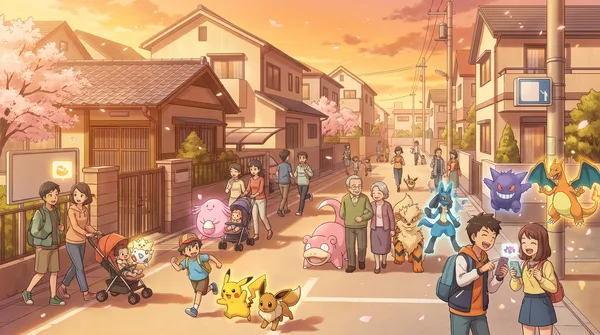
For whom, and in what situation? Adults who want to walk more, in a neighbourhood with accessible routes.
What I propose to explore. Compare walks of similar duration and support, with GO or without a game; examine solo and group participation separately.
How could its value be assessed? Follow steps using a common measure, intensity, social encounters and fatigue over several months. Recontact people who stop and check whether walking continues without the game.
 Supporting toothbrushing
For whom, and in what situation? Children and families who want to make a brushing routine easier.
What I propose to explore. Compare Smile with support of the same duration, including demonstration and a timer. A comparison with another game world would then be needed to isolate the brand.
How could its value be assessed? Observe technique and independence, record the burden on parents and plan an appropriate dental assessment. Time spent with the app does not replace brushing quality.
 Understanding sleep tracking
For whom, and in what situation? Adult volunteers with varied schedules, describing work and family constraints.
What I propose to explore. Compare Sleep with neutral tracking requiring similar effort, using an independent measure common to both groups.
How could its value be assessed? Follow schedules, perceived rest and fatigue, but also score pressure and recordings that do not correspond to sleep. Include dropouts in the analysis.
 Preparing for an examination
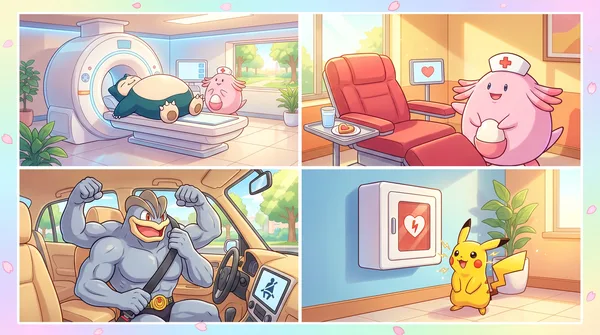
For whom, and in what situation? Children scheduled for an MRI, with their parents and the teams welcoming them.
What I propose to explore. Starting from the existing resource, study preparation with or without familiar characters, with equivalent explanatory content and support.
How could its value be assessed? Record the child's understanding, anxiety and experience, as well as repeated sequences and staff time. Sedation decisions belong to clinical care; report them in context without presuming a reduction.
Supporting a procedure or a return to movement
For whom, and in what situation? Patients whose team already offers distraction during a procedure or adapted activity after care.
What I propose to explore. Develop two distinct protocols: Pokémon distraction versus another enjoyed distraction; supported activity with or without a game, within limits defined by the team.
How could its value be assessed? Choose outcomes specific to each situation: experience and pain for the procedure; mobility, fatigue and independence for movement. Also record interruptions and workload.
 Understanding a collective invitation
For whom, and in what situation? People targeted by a local campaign, including those who do not participate.
What I propose to explore. Compare invitations with or without Pokémon, keeping access to the service, staffing and distribution channels the same.
How could its value be assessed? Measure who is reached and who actually acts, costs and differences between locations or groups. Seeing a poster is not enough to demonstrate a change in behaviour.
 Designing with different needs
For whom, and in what situation? People with disabilities or chronic illnesses, and relatives concerned by a particular use.
What I propose to explore. Start with interviews and trials offering several activities to choose from; adapt breaks, controls and participation arrangements with participants.
How could its value be assessed? Record obstacles, fatigue, enjoyment and freedom to refuse. Describe for whom an adaptation works before considering an effectiveness comparison.
 Learning to observe the living world
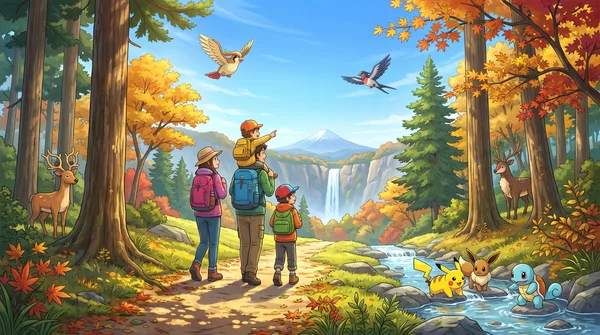
For whom, and in what situation? Children taking part in an educational activity in the same school or community setting.
What I propose to explore. Compare a session connecting Pokémon with real species with an equivalent session without that reference, using the same content and duration.
How could its value be assessed? Assess what is recognised and retained at a later date, as well as transfer to species not presented. Distinguish remembering characters from remembering the living world.
 Expressing an experience through a character
For whom, and in what situation? People wishing to talk about emotions or memories in a voluntary interview setting.
What I propose to explore. Let participants choose a Pokémon character, another familiar reference or no material, then explore what that choice helps them tell.
How could its value be assessed? Analyse the accounts and perceived ease, with participants' consent. This qualitative approach explores meaning; it is neither treatment nor a measure of therapeutic effectiveness.
 Distinguishing card play, relationships and purchases
For whom, and in what situation? Card players of varied backgrounds, meeting in a club or local group.
What I propose to explore. Observe sessions with borrowed cards and comparable playing opportunities, then ask separately about enjoyment of play, collecting and spending.
How could its value be assessed? Follow interactions, the sense of welcome and purchasing pressure. Group participation alone cannot attribute an effect to the cards or the brand.
These questions connect a cultural intuition with observations that can be debated and reproduced. A null response, one that varies between people or an unfavourable one remains a useful result for choosing subsequent uses.