
Expertise in familiar characters
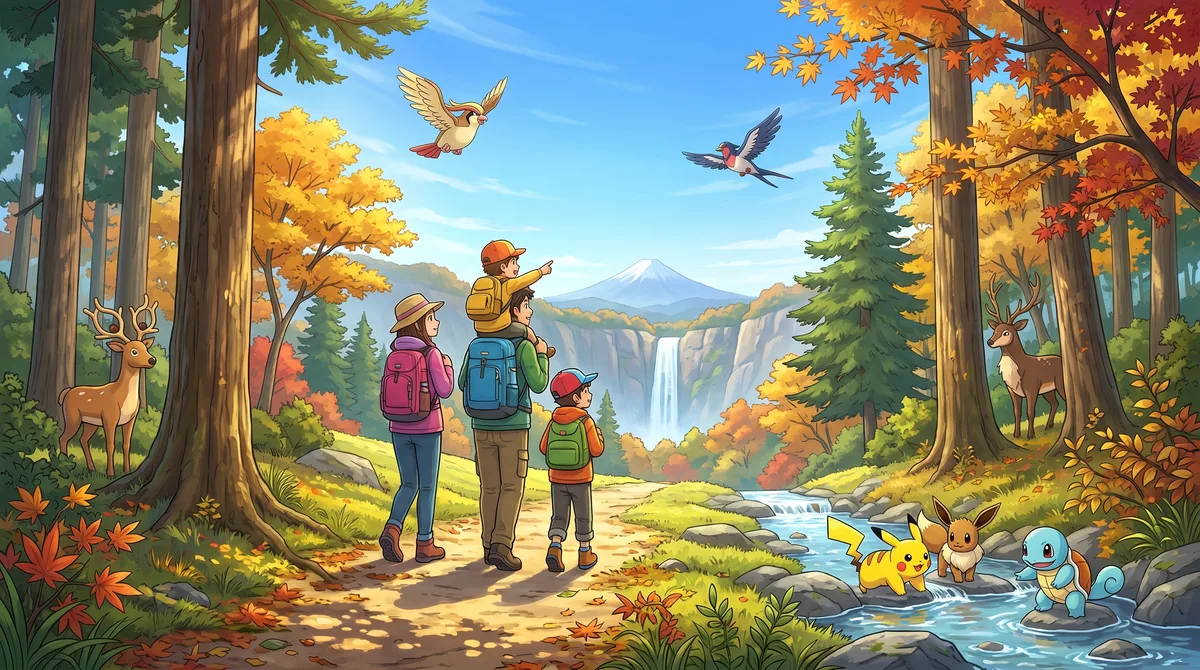
In 2002, Balmford and colleagues compared recognition of Pokémon and real species in 109 British children aged four to eleven. The result shows the place cultural expertise can occupy in a child’s knowledge. It tests neither teaching biodiversity through Pokémon nor transferring that knowledge to local species. Balmford, 2002.
Familiarity is also of interest to memory research. Experiments by Xie and Zhang show that already familiar characters can be retained in larger numbers or consolidated faster in certain visual memory tasks. The advantage concerns familiar stimuli. It does not mean that prescribing play would improve general memory or prevent dementia. Visual memory, 2017; consolidation speed, 2017.
Gomez and colleagues studied visual cortex responses in adults who had played Pokémon extensively during childhood and in novices. Their results inform our understanding of the organisation of specialised responses. The small sample and retrospective nature of the expertise do not justify claims of superior intelligence, a medical benefit or a new architecture in all players. Gomez, 2019.
Learning with a game that takes people outside
A study by Ruiz-Ariza and colleagues followed 190 adolescents for eight weeks, with a GO group and a comparison group. It observed improvements in certain measures of attention, concentration and sociability. The accessible abstract does not allow random assignment to be confirmed. Ruiz-Ariza, 2018.
In 123 Taiwanese students followed for ten weeks, Hsieh and Chen also report favourable results on several dimensions. Memory, well-being and self-control did not improve significantly in their analyses. These mixed findings make an outcome-by-outcome description useful, alongside better-controlled trials to clarify the roles of the game, movement and school context. Hsieh and Chen, 2019.
Pokémon can therefore serve as a setting for studying expertise or as material for an educational activity. Transfer beyond the game remains a separate question: remembering species, understanding a concept, cooperating in class and improving a clinical cognitive function require different outcomes.
Fiction as the starting point for a scientific question
The creatures invite us to observe shapes, compare categories and ask which animals they resemble. The games also contain stories about pollution, energy and relationships between humans and environments. An analysis of these themes in games from 1996 to 2023 documents their presence in the stories. It does not measure their effects on players’ environmental behaviour. Alcott and Maavara, 2025.
A reflection published in 2026 following a museum visit proposes using fans’ expertise as a starting point for biological reasoning. The author also highlights the gaps between fiction and science. A Pokémon that “evolves” transforms as an individual; biological evolution concerns populations over generations. The analogy becomes useful when that difference is explained. Eden, 2026.
An educational project could start with a creature, identify its natural inspirations, then go out to observe the living world. Claiming an educational benefit would require measuring what is understood and retained. Discussing environmental health would require following a further step, with its own behaviours and outcomes.
Tools inspired by Pokémon
At the University of Idaho, an instructor describes Medimon, a world of creatures representing, among other things, cells, organs and diseases. It is an example of adapting collecting mechanics and visual forms for education. It is a Pokémon-inspired creation, distinct from an official franchise programme. The teaching account is not a controlled comparison of learning. University presentation of the Medimon educational project.
This distinction avoids attributing every tool that uses the idea of collecting creatures to Pokémon. It also raises an interesting question: how much of the appeal comes from the mechanics, and how much from an already familiar world?